When computers, servers, hard drives, laptops, and other IT equipment reach the end of their useful life, simply throwing them away is not enough. These devices may still contain confidential business information, customer records, passwords, financial data, and other sensitive information.
Secure IT asset disposal ensures that old equipment is handled responsibly while protecting data, meeting compliance requirements, and supporting environmentally responsible recycling.
What Is Secure IT Asset Disposal?
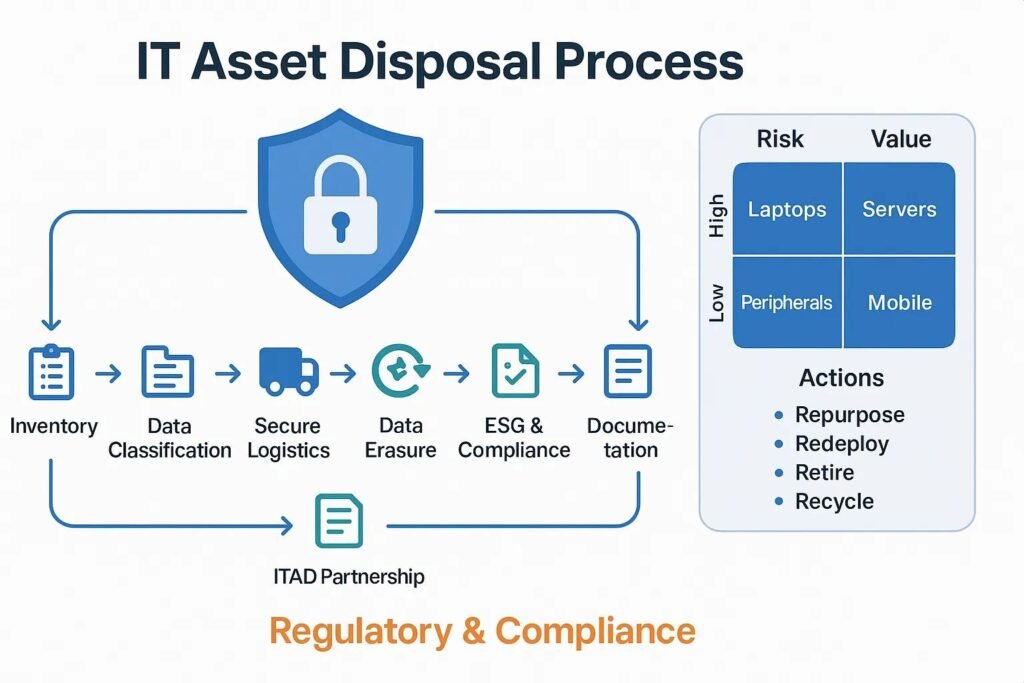
Secure IT asset disposal is the controlled process of collecting, protecting, processing, and disposing of unwanted IT equipment. It typically combines data destruction, asset tracking, reuse, refurbishment, and responsible recycling.
A good disposal process should answer two important questions:
- Has all sensitive data been securely removed or destroyed?
- Has the equipment been handled and recycled responsibly?
Best Practices for Secure IT Asset Disposal
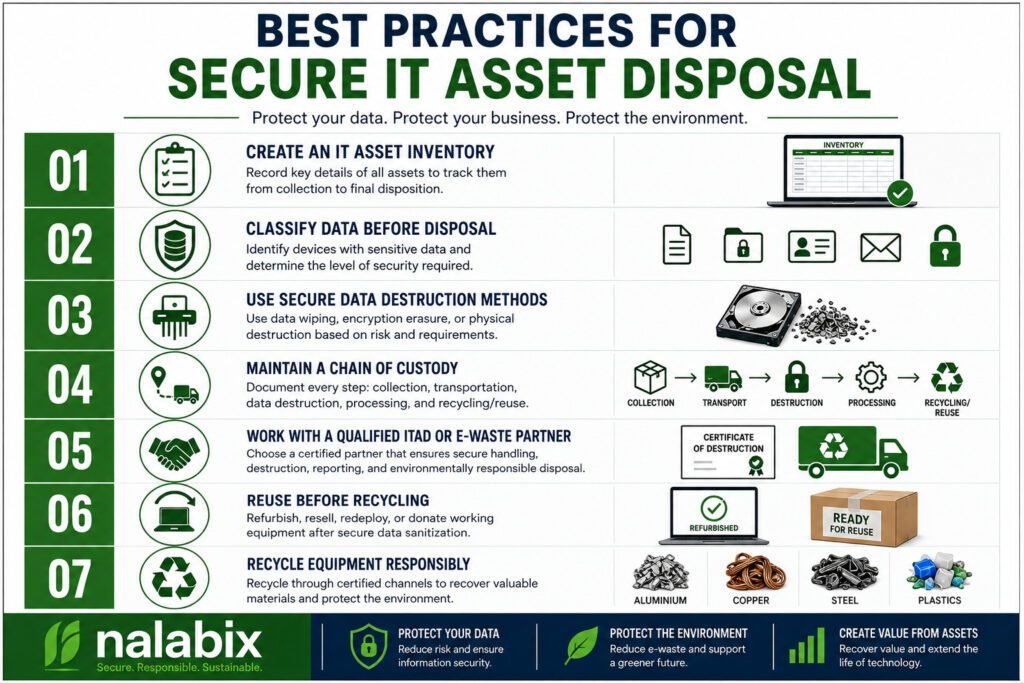
1. Create an IT Asset Inventory
Before disposing of equipment, identify what you have. Record details such as:
- Device type and model
- Serial number or asset tag
- Location
- Condition
- Assigned user or department
- Storage devices present
A proper inventory creates accountability and makes it easier to track every asset from collection to final disposition.
2. Classify Data Before Disposal
Not every device carries the same level of risk. Identify equipment that may contain sensitive information, including:
- Customer and employee records
- Financial information
- Business documents
- Login credentials
- Emails and databases
- Intellectual property
High-risk devices should receive an appropriate level of data destruction before they are reused, recycled, or disposed of.
3. Use Secure Data Destruction Methods
Deleting files or performing a quick factory reset does not always provide sufficient protection.
Depending on the device and security requirements, organizations can use methods such as:
- Secure data wiping – Overwriting or sanitizing storage media so previous data cannot be recovered.
- Cryptographic erasure – Destroying encryption keys where appropriate.
- Physical destruction – Shredding, crushing, or otherwise physically destroying storage media when reuse is not possible or the risk requires it.
For organizations following recognized data-security practices, methods aligned with NIST SP 800-88 can provide a structured approach to media sanitization.
4. Maintain a Chain of Custody
Data security should not stop when equipment leaves your office.
Maintain records showing:
Collection → Transportation → Data Destruction → Processing → Recycling/Reuse
A documented chain of custody helps organizations know where their assets are at every stage and reduces the risk of loss, theft, or unauthorized access.
5. Work With a Qualified ITAD or E-Waste Partner
Choosing the right disposal provider is one of the most important steps. Look for a provider that can demonstrate:
- Secure collection and transportation
- Data destruction capabilities
- Asset tracking and reporting
- Certificates of destruction
- Responsible e-waste recycling
- Appropriate environmental compliance
- Clear documentation of final disposition
A reputable provider should be able to explain exactly what happens to your equipment after collection.
6. Reuse Before Recycling
Not every old device needs to be destroyed. Equipment that is still functional may be suitable for refurbishment, resale, redeployment, or donation after secure data sanitization.
Extending the useful life of equipment reduces electronic waste and helps recover value from technology that still has practical use.
7. Recycle Equipment Responsibly
Devices that cannot be reused should be processed through responsible e-waste recycling channels.
Computers and electronics contain recoverable materials such as aluminium, copper, steel, and other valuable components, but they may also contain substances that require controlled handling.
Responsible recycling helps prevent electronic waste from ending up in uncontrolled dumpsites or informal processing environments.
Why Certificates and Documentation Matter
A secure IT asset disposal process should leave an audit trail.
Depending on the service provided, organizations may receive documents such as:
- Asset inventory reports
- Collection records
- Data destruction certificates
- Certificates of recycling
- Final disposition reports
These records provide evidence that equipment was handled according to the agreed disposal process and can be valuable for internal audits, compliance, and corporate governance.
Common IT Disposal Mistakes to Avoid
Avoid these common practices:
Simply deleting files: Deleted files may remain recoverable.
Throwing computers in general waste: This creates data-security and environmental risks.
Removing the hard drive and ignoring the rest: Other devices may contain storage components or sensitive information.
Using an unverified disposal company: You may lose visibility of what happens to your equipment.
Failing to keep records: Without documentation, it can be difficult to prove how assets were handled.
A Secure Disposal Process Is More Than Getting Rid of Old Equipment
Secure IT asset disposal combines data protection, asset management, compliance, value recovery, and environmental responsibility.
For businesses, the goal should not simply be to remove unwanted computers and electronics from the workplace. The goal is to ensure that every asset is securely tracked, data is properly destroyed or sanitized, reusable equipment is recovered, and e-waste is responsibly recycled.
By following these best practices and working with a qualified ITAD or e-waste management provider, organizations can reduce data-security risks while making their technology disposal process more responsible and accountable.
Secure Your IT Asset Disposal With Nalabix
Nalabix provides secure IT asset disposal, data destruction, IT asset disposition, e-waste collection, and responsible electronics recycling services in Kenya. Our approach helps businesses protect sensitive information while ensuring end-of-life equipment is handled responsibly.