Every computer, laptop, server, and storage device eventually reaches the end of its useful life. But before you sell, recycle, refurbish, or dispose of these devices, you must answer one critical question:
How do you ensure no one can recover the data stored on them?
Despite the risks, many organizations still believe that deleting files or formatting a hard drive provides complete protection. However, readily available software can often recover deleted data, exposing sensitive business information to cybercriminals and unauthorized users.
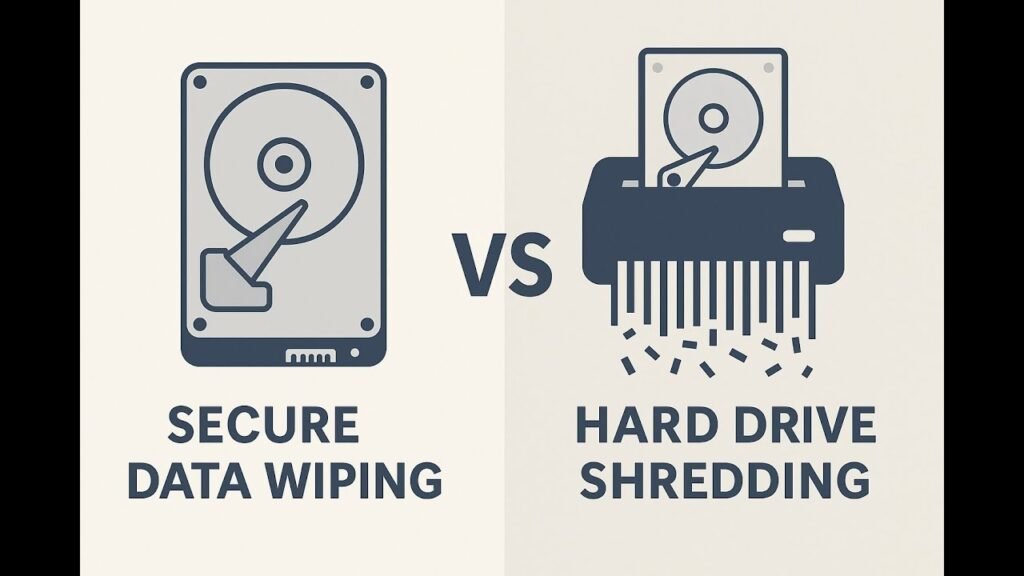
To prevent data breaches, businesses typically choose between secure data wiping and physical hard drive destruction. While both methods are effective when performed correctly, they serve different purposes.
In this guide, we’ll compare both approaches, explain their advantages and limitations, and help you determine which solution best fits your organization’s data security and sustainability goals.
Why Secure Data Disposal Matters
Old storage devices often contain valuable and confidential information, including:
- Customer records
- Financial information
- Contracts and legal documents
- Emails
- Payroll and HR records
- Business reports
- Intellectual property
- Login credentials
If your organization discards these devices without properly sanitizing them, you could face:
- Data breaches
- Identity theft
- Financial losses
- Regulatory penalties
- Reputational damage
- Loss of customer trust
Protecting information should always be the first step before retiring any IT asset.
What Is Secure Data Wiping?
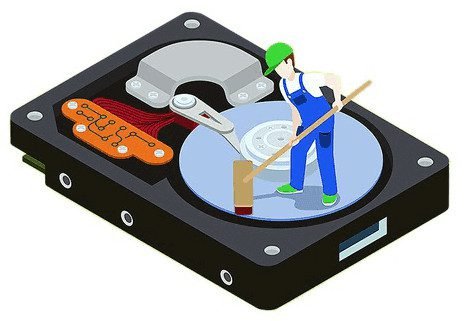
Secure data wiping is a software-based process that permanently overwrites the data stored on a hard drive or solid-state drive (SSD).
Rather than simply deleting files, specialized software writes new data across the storage media multiple times—or follows modern sanitization standards—to make the original information unrecoverable.
How Secure Data Wiping Works
A professional data wiping process typically includes:
- Device identification
- Verification of the storage media
- Secure overwrite using approved sanitization methods.
- Generation of a Certificate of Data Destruction or sanitization report
Professional services commonly follow recognized standards such as NIST SP 800-88 Rev. 1 for media sanitization.
Advantages of Secure Data Wiping.
Allows Equipment Reuse
Because the storage device remains functional, it can be:
- Refurbished
- Resold
- Redeployed
- Donated
This supports sustainability and extends the lifecycle of IT assets.
Maximizes Asset Value
Organizations can recover value from equipment instead of destroying usable hardware.
This is especially important for:
- Enterprise servers
- Business laptops
- Desktop computers
- Storage arrays
Audit Documentation
Professional wiping services provide detailed reports showing:
- Device serial numbers
- Sanitization results
- Verification status
- Completion date
These records support compliance and internal audits.
Limitations of Secure Data Wiping
While highly effective, data wiping may not be appropriate when:
- The storage device is physically damaged.
- The drive cannot be accessed.
- Hardware has failed completely.
- Organizational policies require physical destruction.
- Highly classified information is involved.
In these situations, physical destruction is often the preferred option.
What Is Hard Drive Destruction?
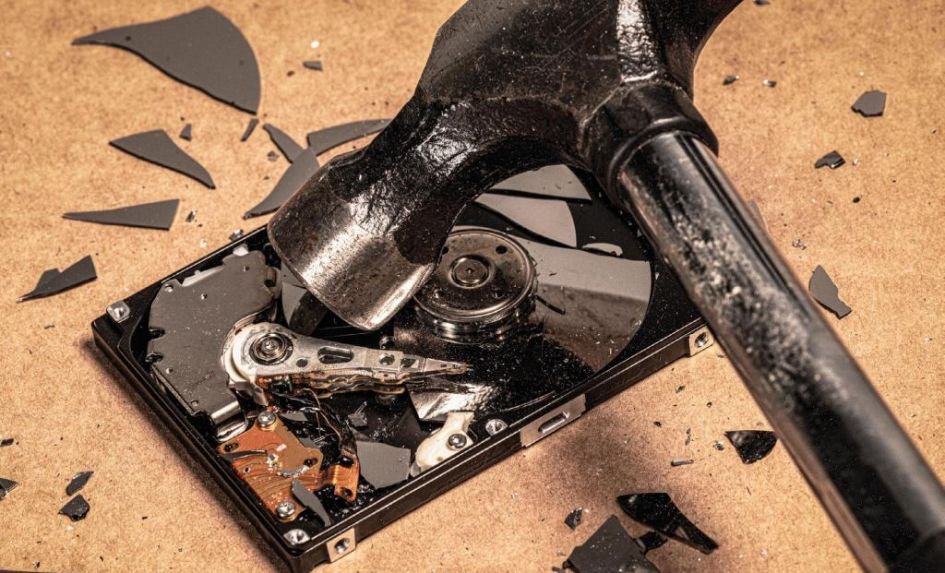
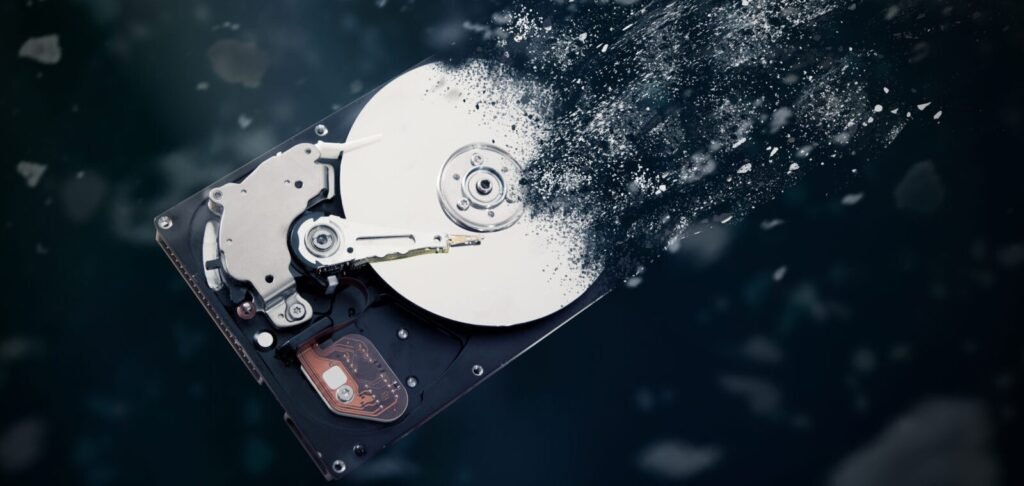
Hard drive destruction involves physically destroying storage media so that the data can never be recovered.
Unlike data wiping, physical destruction permanently renders the storage device unusable.
Common destruction methods include:
- Industrial shredding
- Crushing
- Drilling
- Disintegration
- Degaussing (for compatible magnetic media)
How Hard Drive Destruction Works.
A professional destruction process generally includes:
- Asset inventory
- Secure chain of custody
- Physical destruction
- Material separation
- Responsible recycling of recovered materials
- Certificate of Data Destruction
This ensures both data security and environmentally responsible disposal.
Advantages of Hard Drive Destruction.
Maximum Data Security
Once a drive has been shredded or otherwise destroyed, recovering data is practically impossible.
This makes it suitable for:
- Financial institutions
- Government agencies
- Healthcare organizations
- Legal firms
- Data centres
Fast Processing
Large quantities of obsolete drives can be destroyed quickly during IT refresh projects or data centre decommissioning.
Compliance Support
Many organizations require documented proof that storage devices have been physically destroyed.
Certificates provide evidence for audits and regulatory requirements.
Limitations of Hard Drive Destruction
Physical destruction also has disadvantages.
- The drive cannot be reused.
- Asset recovery value is lost.
- Replacement hardware must be purchased.
- More electronic waste is generated unless materials are properly recycled.
For this reason, destruction should be combined with responsible recycling.
Hard Drive Destruction vs. Secure Data Wiping
| Feature | Secure Data Wiping | Hard Drive Destruction |
|---|---|---|
| Data permanently removed | ✅ Yes | ✅ Yes |
| Drive remains usable | ✅ Yes | ❌ No |
| Supports refurbishment | ✅ Yes | ❌ No |
| Asset value recovery | ✅ Yes | ❌ No |
| Suitable for damaged drives | ❌ No | ✅ Yes |
| Best for failed drives | ❌ No | ✅ Yes |
| Environmentally sustainable | ✅ Excellent | ✅ Good (when recycled) |
| Highest level of physical assurance | ❌ No | ✅ Yes |
Which Option Is Better?
The answer depends on your business objectives.
Choose Secure Data Wiping If:
- Your drives are still functional.
- You plan to resell equipment.
- Devices will be refurbished.
- Equipment will be redeployed internally.
- Sustainability is a priority.
- You want to maximize asset value.
Choose Hard Drive Destruction If:
- Data is highly confidential.
- Internal policy requires physical destruction.
- Devices have reached the end of their lifecycle.
- You need absolute physical assurance.
The Best Practice: Use Both When Appropriate
Many organizations use a combination of both methods.
For example:
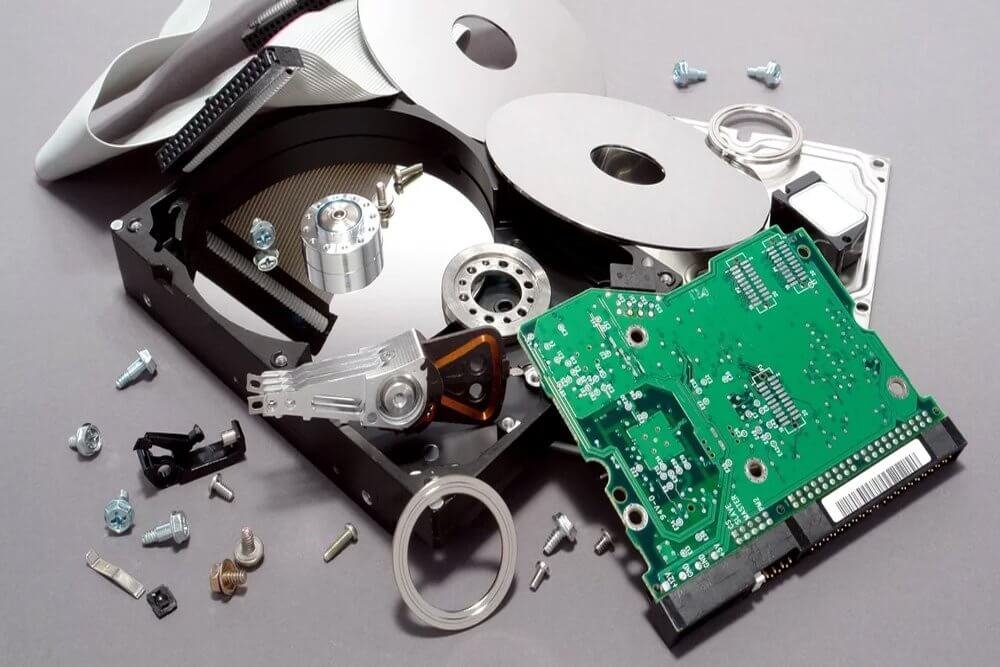
- Functional laptops may undergo secure data wiping before refurbishment.
- Failed hard drives may be physically shredded.
- During a data centre decommissioning project, reusable storage systems can be sanitized while defective media is destroyed.
This balanced approach strengthens security while reducing unnecessary electronic waste.
How Nalabix Protects Your Business Data
Nalabix provides secure, compliant, and environmentally responsible data destruction solutions for businesses across Kenya.
Our services include:
- Secure data wiping
- Hard drive destruction
- SSD destruction
- IT Asset Disposal (ITAD)
- Data centre decommissioning
- Electronic waste recycling
- Secure collection and transportation
- Certificates of Data Destruction
- Asset inventory and reporting
Whether you are retiring a single laptop or hundreds of enterprise storage devices, our team follows documented procedures that prioritize data security, compliance, and environmental responsibility.
Frequently Asked Questions
Is deleting files enough to protect my data?
For this reason, no. Deleted files can remain recoverable, leaving sensitive information exposed. Organizations need secure data wiping or physical destruction to permanently eliminate that risk.
Can SSDs be securely wiped?
Yes. Many SSDs can be securely sanitized using approved methods. However, damaged or inaccessible SSDs are often physically destroyed.
Do you provide certificates?
Yes. Nalabix issues Certificates of Data Destruction and supporting reports for organizations requiring documented proof of secure media sanitization or destruction.
Which method is recommended for businesses?
In practice, most businesses benefit from combining both approaches: secure data wiping for reusable equipment and physical destruction for failed or highly sensitive storage devices.
Final Thoughts
Secure data wiping is ideal when drives remain functional and can be reused, helping businesses recover value while reducing electronic waste. Hard drive destruction provides the highest level of physical assurance for damaged drives or highly confidential information that must never be recoverable.
At Nalabix, we help organizations across Kenya make the right choice through professional data sanitization, certified hard drive destruction, IT Asset Disposal (ITAD), and responsible e-waste recycling.