When a computer, hard drive, server or laptop reaches the end of its useful life, many businesses focus on disposing of the hardware. But there is something far more valuable inside that equipment: data.
Old devices can contain customer records, financial information, employee details, passwords, emails and confidential business files. Simply deleting these files does not necessarily make them disappear.
This is why secure data destruction is an essential part of responsible IT asset disposal.
What Is Data Destruction?
Data destruction is the process of permanently removing information from electronic storage devices so that it cannot be accessed or recovered.
Depending on the type of device and the sensitivity of the information, data can be destroyed through:
- Secure data wiping using recognized standards such as NIST 800-88
- Physical destruction of hard drives and SSDs
- On-site destruction for highly sensitive equipment
- Certified data destruction with proper documentation
The objective is simple: ensure sensitive information does not fall into the wrong hands.
Why Is Data Destruction Important?
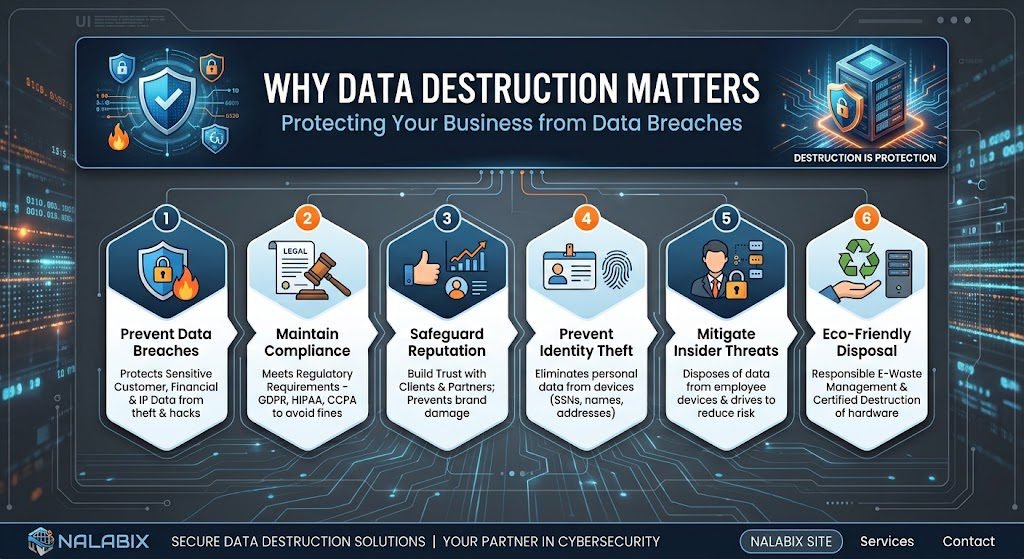
🔐 1. Protects Confidential Information
A retired computer may still contain years of business and customer information.
Even after files are deleted, traces of data may remain on storage media. Proper data destruction helps protect:
- Customer and employee records
- Financial information
- Business documents
- Passwords and login credentials
- Intellectual property
- Confidential communications
For businesses, protecting this information should continue even after a device is no longer in use.
2. Reduces the Risk of Data Breaches
Improperly disposed IT equipment can create an unexpected security risk.
A discarded hard drive could potentially expose sensitive information if it has not been properly wiped or destroyed. This can lead to financial losses, reputational damage and loss of customer trust.
Secure data destruction closes this gap in the IT asset lifecycle.
📋 3. Provides Proof of Responsible Disposal
Businesses should be able to demonstrate what happened to their retired IT equipment.
A professional data destruction service can provide documentation such as a Certificate of Destruction, recording that the data-bearing device was securely processed.
This creates accountability and helps businesses maintain proper internal and compliance records.
🏢 4. Protects Your Company’s Reputation
Customers trust businesses with their information.
If a retired laptop or hard drive ends up exposing customer data, the consequences can extend far beyond the device itself. It can damage the reputation that a business has spent years building.
Secure data destruction shows customers, employees and business partners that information security remains a priority—even when equipment is being retired.
Is Deleting Files Enough?
No.
Deleting a file or formatting a drive is not the same as securely destroying the data.
Depending on the storage device and method used, deleted information may still be recoverable using specialized software or techniques.
For sensitive information, businesses should use a verified data destruction method appropriate to the device and security requirements.
Data Destruction and E-Waste Recycling
Data security and e-waste recycling should work together.
Once data has been securely removed, suitable equipment can be reused, refurbished or recycled instead of being unnecessarily sent to landfill.
For example, a company replacing 100 office computers could have the devices collected, sensitive data securely wiped or storage media destroyed, and the remaining equipment assessed for reuse or responsible recycling.
This approach protects both digital information and the physical environment.
Data Destruction in Kenya
As organizations across Kenya upgrade computers, servers, storage devices and other IT equipment, secure end-of-life management is becoming increasingly important.
Businesses should choose professional data destruction and IT asset disposal services in Kenya that can:
- Identify and track data-bearing devices.
- Apply an appropriate destruction method.
- Maintain records of the process.
- Provide destruction documentation where required.
- Ensure remaining equipment enters responsible reuse or recycling channels.
This is particularly important for organizations handling large volumes of sensitive information, including financial institutions, healthcare organizations, government agencies, educational institutions and technology companies.
What Should Businesses Do With Old Hard Drives?
Do not simply throw them in general waste or hand them over without knowing how the data will be handled.
Instead, businesses should:
Identify → Secure → Destroy → Document → Recycle
This creates a clear chain of responsibility from the moment equipment is retired to its final destination.
The Bottom Line
Data destruction matters because getting rid of a device does not automatically get rid of the information stored on it.
Whether you are replacing a single office computer or decommissioning an entire data centre, secure data destruction helps protect confidential information, reduce security risks and support responsible IT asset disposal.
At the same time, properly processed equipment can be reused or recycled, helping businesses in Kenya move towards a more sustainable circular economy.
Your data may be digital, but the risk of improper disposal is very real. Protect it until the very end of the device’s lifecycle.