
Every electronic device has a lifecycle.
A smartphone is manufactured, purchased, used, repaired, upgraded, and eventually replaced. A computer may serve a business for several years before it becomes outdated. A printer, television, server, or household appliance follows a similar journey.
But what happens when these devices are no longer needed?
This is where the e-waste lifecycle begins to matter.
Understanding the e-waste lifecycle helps individuals, businesses, institutions, and governments make better decisions about how electronic products are purchased, used, reused, collected, recycled, and disposed of.
For Kenya, where the use of computers, smartphones, appliances, networking equipment, and other electronic devices continues to grow, responsible e-waste management is becoming increasingly important.
What Is the E-Waste Lifecycle?
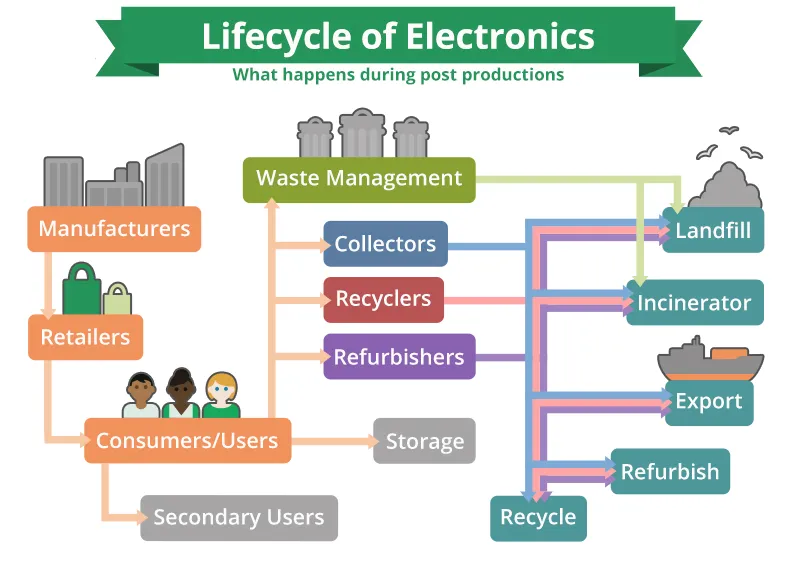
The e-waste lifecycle describes the journey of an electronic product from its creation and purchase through its use, repair, reuse, collection, recycling, and final disposal.
A simple e-waste lifecycle can be understood as:
Manufacturing → Purchase → Use → Repair & Reuse → Collection → Sorting → Recycling → Recovery → Final Disposal
The goal of responsible e-waste management is to keep products and valuable materials in use for as long as possible while minimizing environmental harm.
1. Manufacturing: Where the Lifecycle Begins
The e-waste lifecycle begins long before a device reaches the consumer.
Electronic products are manufactured using a combination of materials, including:
- Plastics
- Aluminium
- Copper
- Steel
- Glass
- Precious metals
- Rare and critical materials
- Electronic components
Manufacturing also requires energy, water, raw materials, transportation, and other resources.
This means the environmental impact of an electronic device does not begin when it becomes waste. It begins during the extraction and production of the materials used to make it.
Why does this matter?
The longer a device remains useful, the more value we get from the resources that went into producing it.
This is one reason why repair, refurbishment, reuse, and responsible recycling are important parts of a circular economy.
2. Purchase and Distribution
After manufacturing, electronic products are transported through supply chains before reaching consumers and organizations.
This may include:
Manufacturer → Distributor → Retailer → Consumer or Business
At this stage, responsible purchasing can already influence the future of e-waste.
Businesses and consumers can consider:
- Product durability
- Repairability
- Warranty and support
- Availability of spare parts
- Energy efficiency
- Upgrade options
- Manufacturer take-back programs
- End-of-life recycling options
Choosing durable products can reduce the frequency with which devices are replaced.
3. The Use Phase
The longest part of an electronic product’s lifecycle is usually its use phase.
A device may remain in service for months or several years depending on its type, condition, technology, and purpose.
For businesses, this could include:
- Computers
- Laptops
- Servers
- Printers
- Monitors
- Network equipment
- UPS systems
- Storage devices
- Telecommunications equipment
During this stage, proper maintenance becomes important.
Regular maintenance, software updates, repairs, component replacement, and responsible handling can help extend the useful life of equipment.
Extending device life reduces waste
Replacing a device simply because it is no longer considered the newest model can contribute to unnecessary e-waste.
Where practical, organizations should consider whether equipment can be:
Maintained → Upgraded → Repaired → Refurbished → Reused
before deciding that it has reached the end of its useful life.
4. Repair, Refurbishment and Reuse
Not every old electronic device is waste.
This is an important distinction.
A computer that is no longer required by one organization may still be perfectly useful to another user.
Before recycling equipment, it is worth determining whether it can be:
- Repaired
- Upgraded
- Refurbished
- Resold
- Donated
- Redeployed
- Used for spare parts
This stage helps maximize the useful life of electronic equipment.
For example, an organization replacing hundreds of computers may be able to refurbish suitable machines and redirect them to another department, school, nonprofit organization, or secondary market.
Reuse comes before recycling
From a circular economy perspective, keeping a functional product in use is generally preferable to immediately dismantling it for materials.
However, equipment containing sensitive information requires an additional consideration: data security.
Before computers, servers, storage devices, or smartphones are reused, appropriate data sanitization should be carried out.
5. When Does Electronic Equipment Become E-Waste?
Eventually, an electronic product may no longer be useful, economical to repair, safe to use, or suitable for reuse.
At this point, it may become electrical and electronic waste, commonly known as e-waste or WEEE (Waste Electrical and Electronic Equipment).
Examples include:
- Broken computers
- Old laptops
- Faulty monitors
- Printers
- Mobile phones
- Servers
- Networking equipment
- Televisions
- Electrical appliances
- UPS units
- Cables
- Circuit boards
- End-of-life electronic components
However, simply throwing these items away is not responsible e-waste management.
The next step should be proper collection and handling.
6. E-Waste Collection
Once equipment reaches the end of its useful life, it needs to enter an appropriate collection system.
E-waste may come from:
- Homes
- Offices
- Schools
- Hospitals
- Banks
- Government institutions
- Manufacturing facilities
- Retail businesses
- Data centers
- Telecommunications companies
For businesses, organized collection is particularly important because large quantities of equipment may need to be removed from offices, warehouses, branches, or data centers.
Professional e-waste collection can help ensure that equipment is:
Collected → Documented → Transported → Sorted → Processed
rather than being mixed with ordinary waste.
7. Sorting and Assessment
After collection, electronic equipment should be assessed and sorted.
This is a critical stage because not every item should follow the same path.
Equipment can generally be separated into categories such as:
Reusable equipment
Devices that remain functional or can be economically refurbished.
Repairable equipment
Devices that require repairs before they can be returned to service.
Recoverable equipment
Items that are no longer practical to reuse but contain valuable materials.
Non-recoverable waste
Materials that have reached the end of their practical recovery options and require appropriate final treatment or disposal.
Sorting helps ensure that maximum value is recovered from the equipment.
8. Data Destruction: A Critical Step for IT Equipment
For computers, servers, hard drives, SSDs, phones, and other devices containing data, the e-waste lifecycle has an additional requirement.
Data must be securely destroyed before equipment is reused, recycled, or disposed of.
Simply deleting files or formatting a drive may not always provide sufficient protection.
Depending on the situation, organizations may use secure data sanitization or physical destruction.
The process may include:
- Secure data wiping
- Verification of data sanitization
- Hard drive destruction
- SSD destruction
- Physical shredding
- Documentation
- Certificate of Data Destruction
For organizations handling confidential or sensitive information, maintaining records of data destruction can provide an important layer of accountability.
9. Recycling and Material Recovery
When equipment can no longer be reused, recycling becomes an important part of the e-waste lifecycle.
During responsible e-waste recycling, equipment can be dismantled and separated into different material streams.
Potentially recoverable materials include:
- Copper
- Aluminium
- Steel
- Certain plastics
- Glass
- Circuit boards
- Other valuable materials
These materials can then enter appropriate recovery and recycling processes.
Why material recovery matters
Electronic devices contain valuable resources.
Recovering these materials reduces the need to rely entirely on virgin raw materials and helps move society toward a circular economy.
Instead of:
Take → Make → Use → Throw Away
the circular approach aims for:
Take → Make → Use → Recover → Reuse → Recycle → Use Again
10. Hazardous Components Require Special Handling
E-waste is not simply a collection of valuable materials.
Some electronic products may contain substances or components that require controlled handling.
Examples can include certain batteries, lamps, refrigerants, chemicals, and other hazardous components depending on the type and age of the equipment.
Improper dismantling, burning, dumping, or informal processing can create environmental and health risks.
This is why e-waste should be handled through appropriate collection, transportation, treatment, recycling, and disposal processes.
11. Final Disposal
The ideal e-waste lifecycle maximizes reuse and material recovery.
However, some residual materials may remain after processing.
These materials may require appropriate final treatment or disposal through authorized waste-management channels.
The objective is to minimize the amount of electronic material that ends up in uncontrolled disposal sites.
Responsible e-waste management therefore follows a hierarchy:
Reduce → Reuse → Repair → Refurbish → Recover → Recycle → Safely Dispose
The E-Waste Lifecycle and the Circular Economy
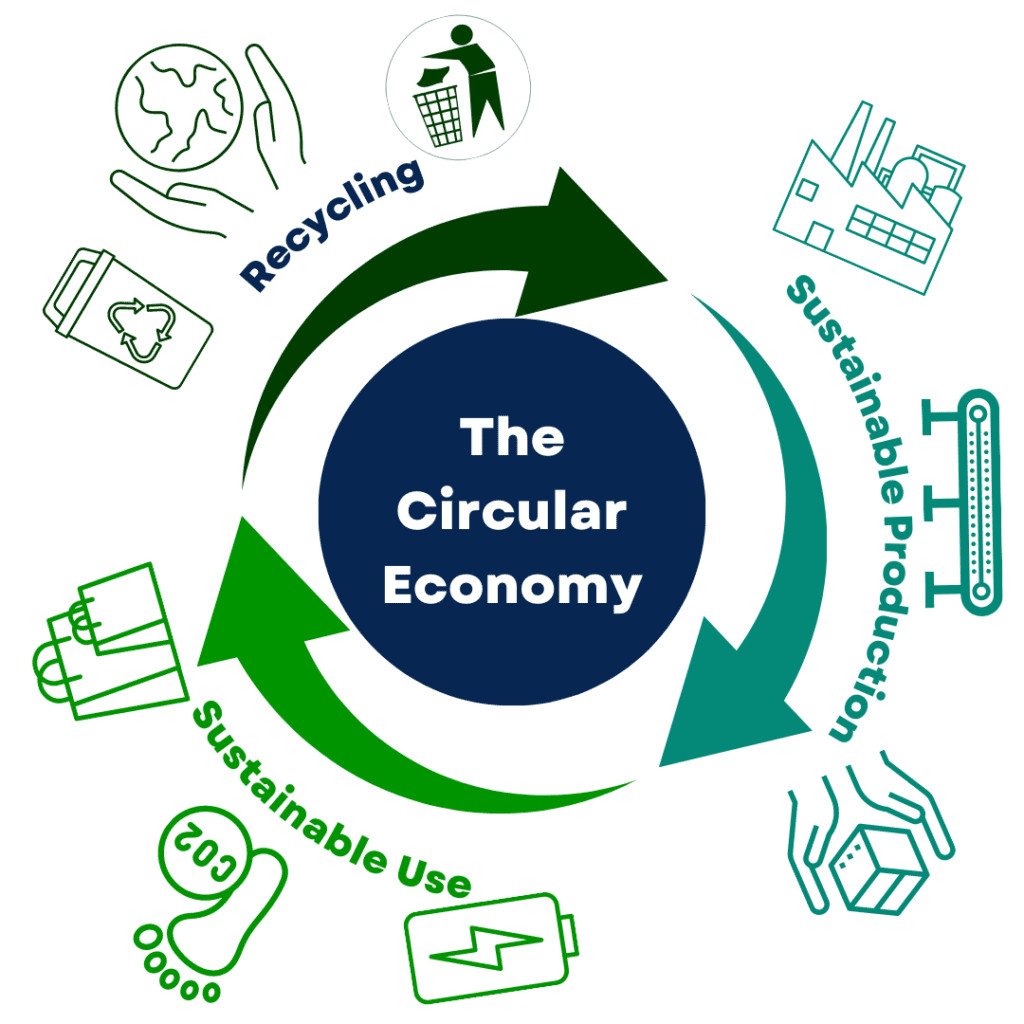
The e-waste lifecycle is closely connected to the concept of the circular economy.
A traditional linear economy follows:
Extract → Manufacture → Use → Dispose
A circular economy attempts to keep products, components, and materials in circulation for as long as possible.
For electronics, this means:
- Designing products for longer use
- Repairing equipment
- Refurbishing devices
- Reusing components
- Recovering valuable materials
- Recycling electronic waste
- Reducing unnecessary disposal
The objective is simple:
Get more value from every electronic product while generating less waste.
Why Businesses Should Understand the E-Waste Lifecycle
Businesses can generate significant amounts of electronic waste when they upgrade technology, replace office equipment, expand operations, or decommission IT infrastructure.
Without a structured process, old equipment can accumulate in storage rooms or be disposed of incorrectly.
A proper e-waste management program can help businesses:
♻️ Reduce environmental impact
Responsible recycling prevents valuable materials from being unnecessarily lost and reduces uncontrolled disposal.
🔐 Protect sensitive data
Secure data destruction helps prevent confidential information from remaining on retired devices.
📋 Improve accountability
Documentation provides a record of what equipment was collected, processed, recycled, reused, or destroyed.
💰 Recover value
Some end-of-life equipment may retain resale, refurbishment, component, or material value.
🌱 Support ESG goals
Responsible electronics management can contribute to environmental sustainability and corporate responsibility objectives.
⚖️ Support compliance
Working with appropriate waste-management partners can help organizations meet applicable environmental and waste-management requirements.
The E-Waste Lifecycle in Kenya
Kenya’s increasing use of digital technology means responsible e-waste management is becoming increasingly important.
Businesses, institutions, households, and government organizations regularly replace computers, phones, printers, networking equipment, electrical appliances, and other electronic devices.
The challenge is ensuring that these products do not simply move from an office or home to an uncontrolled dumping environment.
A responsible approach involves:
Identify → Collect → Secure → Sort → Reuse → Recycle → Recover → Dispose Responsibly
Organizations in Kenya can therefore integrate e-waste management into their wider environmental, sustainability, ESG, procurement, and IT asset management programs.
How to Manage Your E-Waste Responsibly
Whether you are an individual or an organization, you can take practical steps to improve the way you manage electronic waste.
1. Buy durable equipment
Consider quality, repairability, warranty, and expected lifespan.
2. Maintain your devices
Proper maintenance can extend equipment life.
3. Repair before replacing
A faulty component does not necessarily mean the entire device is waste.
4. Reuse where possible
Redeploy functional equipment instead of immediately discarding it.
5. Secure your data
Always protect sensitive information before disposing of IT equipment.
6. Separate e-waste
Do not mix electronic equipment with ordinary household or commercial waste.
7. Use responsible recyclers
Work with appropriate e-waste management and recycling providers.
8. Keep documentation
Businesses should maintain records of collection, data destruction, recycling, and final processing where applicable.
From Electronic Product to Recovered Resource
The e-waste lifecycle shows that an old electronic device is not necessarily the end of the story.
A retired laptop may become a refurbished computer.
A damaged computer may become a source of spare parts.
A discarded cable may provide copper for recovery.
An obsolete server may be securely decommissioned and its materials recovered.
A broken electronic device may therefore move from being a waste problem to becoming a resource opportunity.
This is the foundation of responsible e-waste management and the circular economy.
Final Thoughts
Understanding the e-waste lifecycle helps us see electronic waste differently.
E-waste does not begin when a device reaches the bin. Its lifecycle starts with the extraction of raw materials and continues through manufacturing, distribution, use, repair, reuse, collection, recycling, recovery, and final disposal.
The most sustainable approach is to keep products useful for as long as possible and recover their materials when they finally reach the end of their useful life.
For businesses and institutions, this means e-waste management should not be treated as an afterthought. It should be part of a structured process covering IT asset management, data security, environmental responsibility, recycling, and resource recovery.
♻️ The goal is not simply to dispose of electronics.
The goal is to keep their value in circulation for as long as possible.
Need Responsible E-Waste Management in Kenya?
Nalabix provides professional e-waste collection, electronic waste recycling, IT asset disposal, data destruction, equipment recycling, and responsible end-of-life management services in Kenya.
Whether you are disposing of a few computers or managing a large corporate IT asset disposal project, responsible handling can help protect your data, recover valuable resources, and reduce the environmental impact of electronic waste.
Nalabix – Your Trusted Partner in Eco-Friendly E-Waste Recycling in Kenya.