
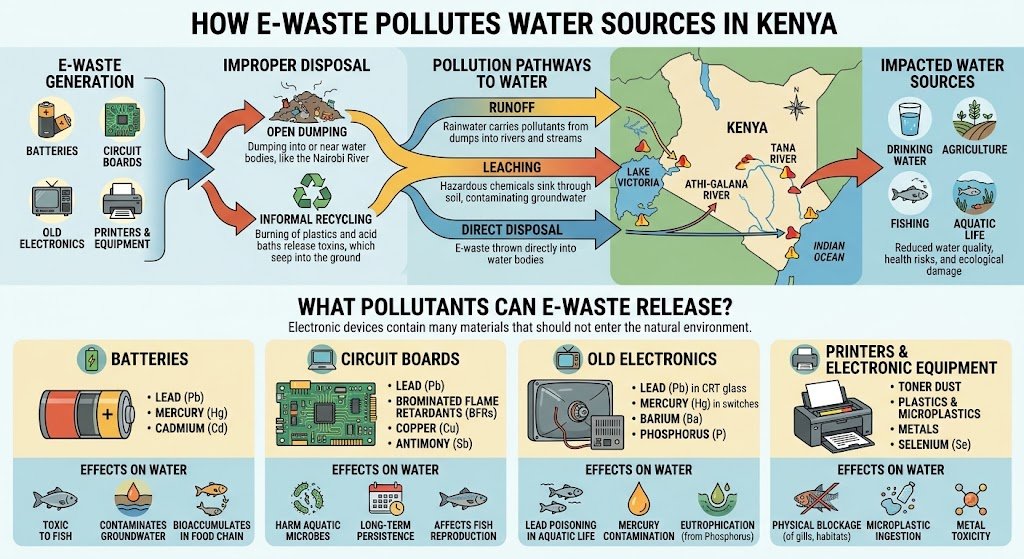
Electronic waste, or e-waste, is more than an unsightly pile of old computers, phones, batteries and appliances. When poorly disposed of, it can become a serious source of water pollution.
Across Kenya, discarded electronics are often mixed with general waste and taken to open dumpsites. When rain falls, water can pass through this waste, pick up hazardous substances and carry them into soil, groundwater, rivers, streams, dams and other water sources.
NEMA identifies poor e-waste disposal as a cause of soil, land and water pollution.
How Does E-Waste Get Into Water?
One of the main pathways is leaching.
When electronic waste is dumped on bare ground, rainwater can seep through the waste. As it moves, it may dissolve or carry contaminants from batteries, circuit boards, cables and other electronic components.
The contaminated water, known as leachate, can then move into surrounding soil and eventually reach groundwater or nearby surface water.
The problem can become worse when e-waste is dumped near:
- Rivers and streams
- Lakes and wetlands
- Drainage channels
- Boreholes and wells
- Agricultural land
- Open dumpsites
NEMA notes that leachates from dumpsites can release pollutants from e-waste into the soil and surrounding environment.
What Pollutants Can E-Waste Release?
Electronic devices contain many materials that should not enter the natural environment.
Some examples include:
🔋 Batteries – Certain batteries may contain hazardous substances such as lead, mercury or cadmium.
💻 Circuit boards – May contain metals and other substances that can contaminate soil and water.
📺 Old electronics – Components from older equipment may contain lead and other hazardous materials.
🖨️ Printers and electronic equipment – Toners, plastics, metals and electronic components can contribute to contamination when improperly discarded.
Kenya’s e-waste guidelines identify substances including lead, cadmium, chromium and mercury among hazardous materials associated with electronic waste. Some of these substances can be harmful to aquatic environments.
The Battery Problem in Kenya
Batteries deserve particular attention because they are frequently thrown away together with ordinary household waste.
Kenya’s National Solid Waste Management Strategy notes that some alkaline, rechargeable and silver-oxide batteries contain hazardous substances such as mercury and cadmium. It also highlights the historical challenge of limited dedicated facilities for some battery types, resulting in batteries being disposed of alongside general waste.
The Eveready Example in Nakuru
Nakuru has a long history with battery manufacturing. Eveready East Africa operated a major battery manufacturing facility in Nakuru, which eventually closed in 2014.
The wider lesson from Nakuru is important: batteries and battery-related waste require controlled handling and should never be treated as ordinary household rubbish.
Nakuru continues to face broader waste-management challenges. The county and NEMA have worked on establishing better e-waste collection and management systems to reduce the environmental impact of discarded electronics.
Why Is E-Waste Pollution Dangerous to Water?
Once hazardous substances enter water, they can affect more than the water itself.
Contaminated water can potentially affect:
- 🐟 Fish and aquatic organisms
- 🌱 Plants and crops
- 🐄 Livestock
- 💧 Groundwater supplies
- 👨👩👧 Communities depending on local water
- 🌍 Aquatic ecosystems
Some contaminants can persist in the environment and accumulate in organisms, creating risks that extend through the food chain.
Protecting Water Starts With Responsible E-Waste Disposal
Water pollution from e-waste does not always happen suddenly. Sometimes it begins with something as small as a discarded battery, phone or computer component.
Once rainwater carries contaminants through a dumpsite, the pollution can move beyond the original disposal site and affect surrounding soil and water.
For Kenya, responsible e-waste collection, recycling and disposal is therefore an important part of protecting our rivers, lakes, groundwater and communities.
Don’t let yesterday’s electronics become tomorrow’s water pollution. Dispose of e-waste responsibly.
Frequently Asked Questions
Can e-waste contaminate groundwater?
Yes. When rainwater passes through improperly disposed e-waste, it can carry contaminants into soil and potentially groundwater.
Which e-waste items are most concerning for water pollution?
Batteries, circuit boards, old electronic equipment and other components containing hazardous substances require careful handling.
Can batteries be thrown in normal rubbish?
They should not be treated as ordinary household waste. Batteries should be collected separately and sent to appropriate recycling or disposal channels.
Does burning e-waste pollute water?
Yes, indirectly. Burning can release hazardous substances into the air and leave contaminated ash and residues that can later enter soil and water.
How can businesses prevent e-waste pollution?
Businesses should work with responsible e-waste handlers for collection, sorting, recycling, data destruction where required, and proper documentation of end-of-life equipment.
In Kenya, responsible e-waste management protects more than the environment — it helps protect the water resources communities depend on every day.