Sustainability is no longer just a corporate trend—it’s a business necessity. Customers, investors, employees, and regulators increasingly expect organizations to operate responsibly, reduce their environmental footprint, and contribute to a greener future. Businesses that embrace sustainability not only help protect the planet but also gain a competitive advantage through improved efficiency, stronger brand reputation, and long-term resilience.

An eco-friendly business integrates environmentally responsible practices into every aspect of its operations, from energy use and waste management to procurement, technology, and product lifecycle management. By reducing waste, conserving resources, and adopting circular economy principles, businesses can lower operating costs while creating lasting environmental and social impact.
At Nalabix, we help organizations across Kenya become more sustainable through secure electronic waste recycling, IT asset disposal (ITAD), certified data destruction, and circular economy solutions that support responsible business growth.
What Is an Eco-Friendly Business?
An eco-friendly business is an organization that actively reduces its environmental impact by using sustainable practices, minimizing waste, conserving natural resources, and complying with environmental regulations.
Eco-friendly businesses strive to:
- Reduce carbon emissions
- Recycle and recover materials
- Improve energy efficiency
- Conserve water and natural resources
- Reduce pollution
- Support the circular economy
- Strengthen ESG (Environmental, Social, and Governance) performance

Sustainability is not limited to large corporations—small and medium-sized enterprises (SMEs), NGOs, schools, government institutions, and startups can all adopt eco-friendly business practices.
Why Eco-Friendly Businesses Matter
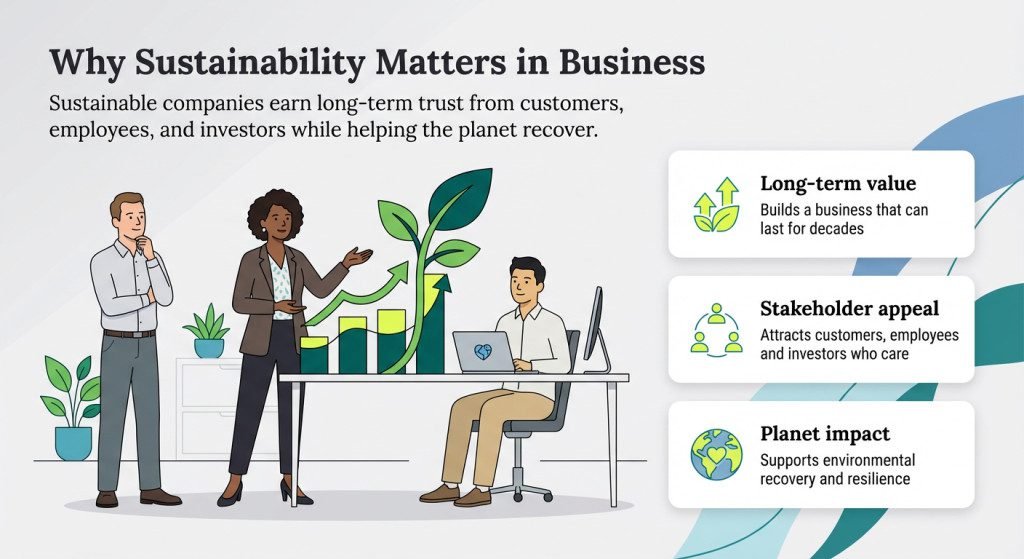
Businesses play a significant role in addressing environmental challenges such as climate change, resource depletion, and electronic waste. Every organization generates waste, consumes energy, and uses technology, making sustainability an important part of responsible business management.
By adopting eco-friendly practices, businesses can:
- Reduce operational costs.
- Improve environmental compliance.
- Strengthen customer trust.
- Enhance corporate reputation.
- Attract environmentally conscious investors.
- Improve employee engagement.
- Contribute to national and global sustainability goals.
Sustainable businesses are better positioned to thrive in an economy that increasingly values environmental responsibility.
Key Characteristics of an Eco-Friendly Business
Responsible Waste Management
Eco-friendly businesses reduce, reuse, and recycle waste wherever possible.
This includes:
- Recycling paper, plastics, and metals
- Separating recyclable materials
- Proper disposal of hazardous waste
- Responsible electronic waste recycling
Proper waste management reduces landfill use and conserves valuable resources.
Sustainable IT Management
Technology is essential for business, but it also generates significant electronic waste.
Sustainable IT practices include:
- Extending the lifespan of IT equipment
- Refurbishing computers and laptops
- Secure IT Asset Disposal (ITAD)
- Certified data destruction
- Responsible e-waste recycling
Partnering with licensed recyclers such as Nalabix ensures obsolete electronics are managed securely and sustainably.
Energy Efficiency
Reducing energy consumption lowers operating costs and carbon emissions.
Examples include:
- LED lighting
- Energy-efficient computers
- Smart power management
- Solar energy integration
- Efficient office equipment
Sustainable Procurement
Eco-friendly businesses choose suppliers and products that prioritize environmental responsibility.
This may include:
- Recycled office materials
- Energy-efficient electronics
- Sustainable packaging
- Environmentally certified suppliers
Practical Ways to Make Your Business More Eco-Friendly
Every organization can begin its sustainability journey with practical, measurable actions.
Reduce Energy Consumption
- Switch to LED lighting.
- Turn off unused equipment.
- Invest in energy-efficient appliances.
- Consider renewable energy solutions.
Reduce Paper Usage
- Digitize records.
- Use electronic invoicing.
- Encourage digital collaboration.
- Print only when necessary.
Recycle Responsibly
- Separate recyclable waste.
- Partner with licensed recycling companies.
- Implement office recycling programmes.
Manage Electronic Waste Sustainably
- Maintain an IT asset register.
- Extend equipment lifecycles through maintenance.
- Schedule regular electronic waste collection.
- Securely destroy sensitive data before disposal.
- Recycle obsolete IT equipment through certified recyclers.
Encourage Employee Participation
- Provide sustainability training.
- Promote environmentally friendly workplace habits.
- Establish green office initiatives.
How Nalabix Supports Eco-Friendly Businesses in Kenya
Nalabix partners with organizations to help them achieve their sustainability goals through secure and environmentally responsible electronic waste management solutions.
Our Sustainable Business Solutions
- Electronic waste recycling
- IT Asset Disposal (ITAD)
- Certified data destruction
- Electronic waste collection
- IT equipment refurbishment
- ESG waste management support
- Circular economy solutions
- Environmental compliance documentation
By helping businesses recover valuable resources and reduce electronic waste, Nalabix enables organizations to operate more sustainably while protecting confidential information and the environment.
Best Practices for Building an Eco-Friendly Business
To create a lasting environmental impact:
- Develop a sustainability policy.
- Measure and reduce your environmental footprint.
- Invest in energy-efficient technologies.
- Reduce, reuse, and recycle resources.
- Manage electronic waste responsibly.
- Work with environmentally responsible suppliers.
- Monitor ESG performance.
- Educate employees about sustainability.
Consistent improvements over time create measurable business and environmental benefits.

Frequently Asked Questions
What is an eco-friendly business?
An eco-friendly business is an organization that minimizes its environmental impact by adopting sustainable practices such as recycling, energy efficiency, responsible waste management, and resource conservation.
Why should businesses become eco-friendly?
Eco-friendly businesses reduce costs, strengthen brand reputation, improve compliance, attract environmentally conscious customers, and support long-term sustainability.
How does electronic waste management support sustainability?
Responsible e-waste management prevents pollution, protects sensitive data, recovers valuable materials, and supports the circular economy.
Can small businesses become eco-friendly?
Absolutely. Small businesses can implement simple initiatives such as reducing paper use, improving energy efficiency, recycling electronic waste, and purchasing sustainable products.
Nalabix is proud to help organizations across Kenya achieve their sustainability goals through professional electronic waste recycling, secure IT asset disposal, certified data destruction, and circular economy solutions.
Partner with Nalabix today and take the next step toward building a cleaner, more sustainable, and environmentally responsible business.