As businesses embrace cloud computing, virtualization, and modern IT infrastructure, many traditional data centres eventually reach the end of their operational life. Whether you’re relocating, upgrading equipment, consolidating facilities, or migrating to the cloud, retiring a data centre requires careful planning and execution.
Data centre decommissioning is far more than disconnecting servers and removing equipment. It involves securely retiring IT assets, protecting sensitive data, recovering valuable equipment, and ensuring electronic waste is recycled responsibly.
Without a structured decommissioning process, organizations risk data breaches, regulatory non-compliance, unnecessary downtime, and environmental harm.
At Nalabix, we provide professional data centre decommissioning services in Kenya, helping businesses safely retire IT infrastructure while maximizing value recovery and ensuring environmentally responsible disposal.
What Is Data Centre Decommissioning?
Data centre decommissioning is the planned process of safely shutting down, dismantling, removing, and disposing of IT infrastructure that is no longer needed.
The process includes retiring:
- Servers
- Storage systems
- Network switches and routers
- UPS systems
- Backup batteries
- Server racks and cabinets
- Peripheral devices
- End-user computing devices
The objective is to securely remove technology while minimizing operational disruption and protecting valuable business information.
Why Businesses Decommission Data Centres
Organizations retire data centres for many reasons, including:
Cloud Migration
Many businesses are moving workloads to cloud platforms to improve scalability, reduce costs, and simplify infrastructure management.
Technology Refresh
Legacy servers and storage systems eventually become outdated, requiring replacement with newer, more efficient equipment.
Business Growth
Expanding organizations often consolidate multiple server rooms into centralized or cloud-based environments.
Office Relocation
When businesses move to new premises, IT infrastructure must be safely removed and relocated or retired.
Compliance Requirements
Organizations must properly dispose of obsolete IT equipment while protecting confidential information and complying with environmental regulations.
Why Professional Data Centre Decommissioning Matters
A poorly managed decommissioning project can expose businesses to significant risks.
Professional decommissioning helps organizations:
- Prevent data breaches
- Recover valuable IT assets
- Maintain regulatory compliance
- Reduce environmental impact
- Lower disposal costs
- Improve ESG performance
- Minimize operational disruption
It transforms what could be a complex and risky project into a controlled, secure, and efficient process.

The Nalabix Data Centre Decommissioning Process
At Nalabix, we handle your data centre exit end-to-end. Our process is audit-compliant, secure, and designed to maximize value recovery
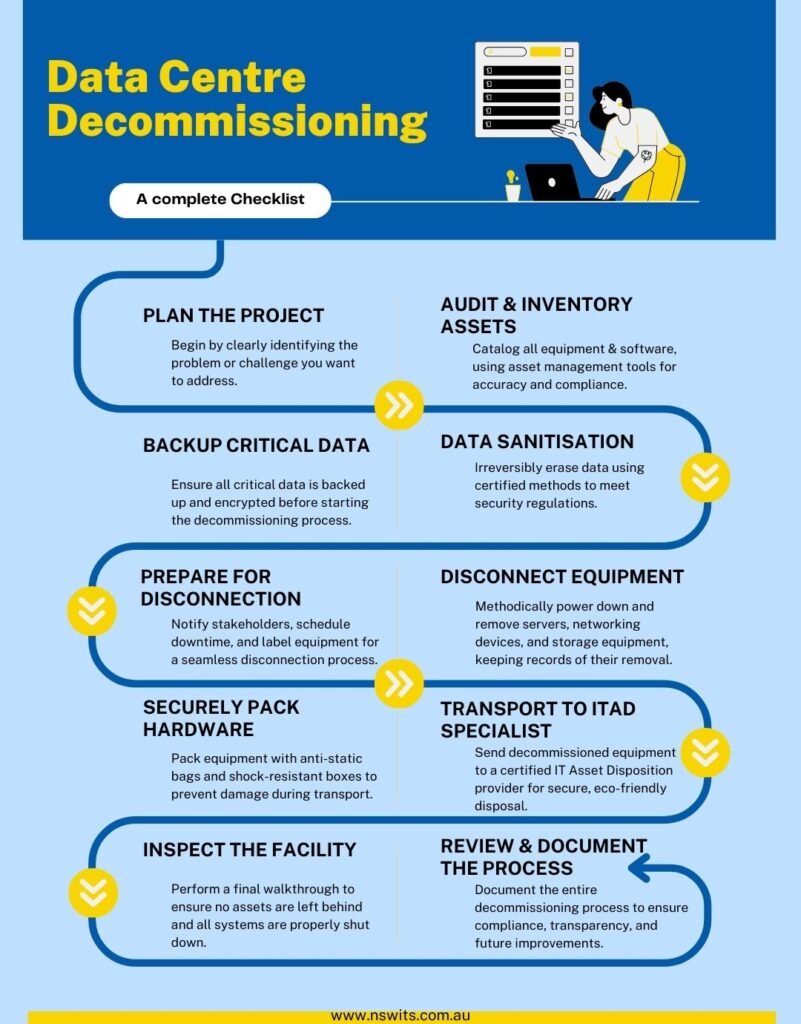
Step 1: Discovery and Audit
We conduct a comprehensive inventory of your data centre, including rack maps, serial numbers, and power and cooling dependencies. This phase ensures accurate scope and planning.
Step 2: De-Racking and Packout
As part of our secure and methodical decommissioning process, our teams carefully de-rack equipment, organize assets into clearly labeled pallets and boxes, and secure all data-bearing media in sealed containers with tamper-evident tape. Throughout the entire process, every item is tracked through a detailed serial-level chain of custody, ensuring complete visibility, accountability, and protection from collection through final disposition.
Step 3: Data Handling
We offer two primary methods, aligned with NIST 800-88 standards.
NIST 800-88 Purge (Software Wiping): Verified wipes with serial logs, allowing devices to remain reusable and resaleable.
Physical Destruction: On-site shredding (which you can witness) or off-site destruction. This is ideal for high-sensitivity data.
Step 4: Disposition
- Value Recovery: Reusable assets are refurbished and remarketed. Cash offers offset your disposal costs.
- Responsible Recycling: Non-reusable materials are processed through R2v3-aligned downstream partners, ensuring zero harmful dumping
Step 5: Evidence Pack
You receive a complete audit-ready package including:
- Certificate of Destruction
- Serial number logs
- Chain-of-custody documentation
- Optional photos and time-stamps
Common Equipment Removed During Data Centre Decommissioning
A typical project may include:
IT Infrastructure
- Rack servers
- Blade servers
- Storage arrays
- SAN and NAS systems
- Backup appliances
Networking Equipment
- Core switches
- Edge switches
- Routers
- Firewalls
- Wireless controllers
Facility Equipment
- Server racks
- Cooling systems
- Structured cabling
- Environmental monitoring systems
Common Challenges During Decommissioning
Organizations often face challenges such as:
- Large volumes of equipment
- Complex infrastructure
- Tight project timelines
- Sensitive business data
- Compliance requirements
- Hazardous battery disposal
- Asset tracking
Partnering with experienced professionals helps mitigate these risks.

Sustainable Data Centre Decommissioning
Modern decommissioning is closely aligned with sustainability goals.
Instead of disposing of everything, organizations should prioritize:
- Reuse
- Refurbishment
- Asset recovery
- Responsible recycling
- Material recovery
- Circular economy practices
These strategies reduce environmental impact while maximizing the value of retired IT assets.
Frequently Asked Questions
What is data centre decommissioning?
In this context, it refers to the structured process of retiring, removing, sanitizing, and responsibly disposing of obsolete data centre infrastructure while protecting sensitive information and maximizing asset recovery.
Why is data destruction important during decommissioning?
Beyond the physical removal of equipment, protecting the information stored within retired assets is equally critical. Servers and storage devices often contain confidential business information; therefore, certified data destruction ensures that this information cannot be recovered after disposal.
Can old data centre equipment be reused?
Yes. Many servers, networking devices, and storage systems can be refurbished, resold, or redeployed if they remain functional.
What happens to equipment that cannot be reused?
Non-functional equipment is dismantled, valuable materials are recovered for recycling, and hazardous components are safely managed according to environmental standards.
Final Thoughts
In an increasingly security-conscious and sustainability-driven environment, data centre decommissioning extends well beyond simply clearing out old servers. Instead, it is a carefully managed strategic process that protects sensitive information, ensures regulatory compliance, recovers maximum asset value, and supports a more sustainable future.
With AI accelerating refresh cycles and Kenya’s regulatory landscape tightening, the time to plan your data centre exit strategy is now.