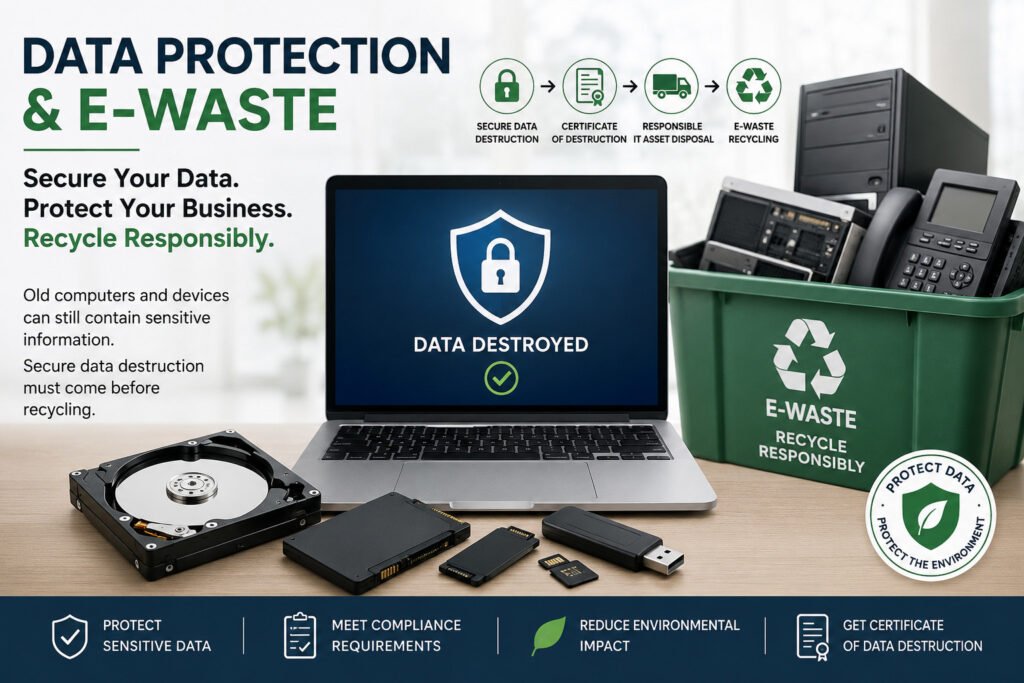
An old computer may look like nothing more than obsolete equipment. But before it becomes e-waste, there is another question businesses and organisations should ask:
What happened to the data stored on it?
Computers, laptops, servers, hard drives, SSDs, phones and other electronic devices can contain personal, confidential and sensitive information long after they are no longer being used.
Simply deleting files, emptying the recycle bin or formatting a device does not necessarily mean that the information has been securely destroyed.
This creates an important connection between data protection and e-waste management.
A device can be physically disposed of while the data on it remains exposed. When electronic equipment leaves an organisation without proper data sanitization or destruction, information may potentially be recovered or accessed by unauthorised persons.
For businesses in Kenya, secure disposal should therefore mean more than simply getting rid of unwanted equipment.
The data needs to be securely addressed before the equipment is reused, transferred, recycled or destroyed.
What Data Can Be Left on an Old Computer?
An end-of-life computer can contain much more information than users realise.
Depending on how the device was used, it may contain:
- Customer and employee information
- Names, addresses and contact details
- Emails and correspondence
- Financial and accounting records
- HR and payroll information
- Business documents and contracts
- Login credentials and saved account information
- Photos and other personal files
- Medical or other sensitive information
- Browser history and cached information
- Data stored on internal and external drives
Even when a computer is no longer operational, its storage media may still contain information.
That is why the condition of the device does not determine whether the data is still a risk.
Data Protection in Kenya: Why Secure Disposal Matters
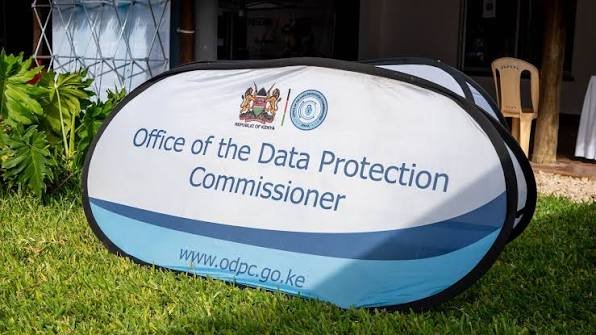
Kenyan organisations that handle personal data have responsibilities under the Data Protection Act, 2019.
This means organisations should think about data protection throughout the information lifecycle — including when equipment containing personal data reaches the end of its useful life.
Secure IT asset disposal should therefore form part of an organisation’s wider data protection and information security practices.
This is particularly important for organisations handling large volumes of customer, employee, financial, healthcare, government or other confidential information.
A secure disposal process helps reduce the possibility of personal information being exposed after equipment leaves the organisation.
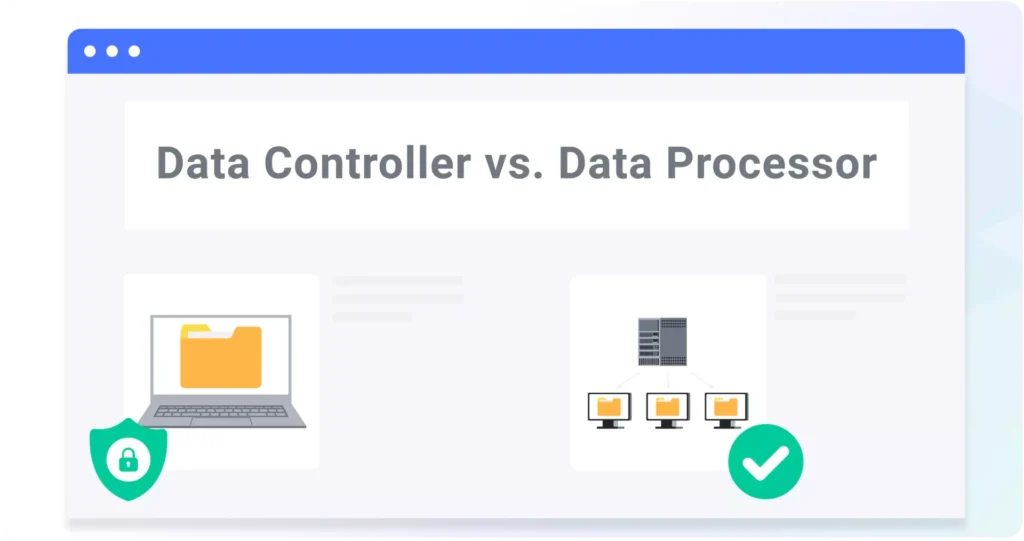
Data Controller or Data Processor?
When an organisation owns the information stored on its devices and determines why and how that personal data is processed, it may act as a Data Controller.
When a service provider processes personal data on behalf of that organisation—for example, by handling devices containing personal data for secure destruction—it may act as a Data Processor.
This distinction is important when outsourcing IT asset disposal and data destruction.
In such circumstances, the parties should clearly understand their respective responsibilities, contractual obligations and data protection requirements.
This is why professional IT Asset Disposition and data destruction should be handled through defined procedures rather than simply handing old computers to an unknown disposal channel.
Data Wiping vs Physical Data Destruction
Not every device needs to be physically destroyed.
The appropriate method depends on factors such as the type and condition of the storage media, whether the equipment will be reused, the client’s requirements and the level of assurance required.
Secure Data Sanitization
Where equipment or storage media is suitable for continued use, an appropriate sanitization method can be used to remove data before the asset is reused or redeployed.
The objective is to ensure that previous information cannot be accessed by an unauthorised party.
Physical Destruction
Where storage media is damaged, unsuitable for reuse, at end-of-life, or where physical destruction is required, the storage media can be physically destroyed.
For example, hard drives and SSDs can undergo controlled destruction so that the stored information cannot practically be recovered from the resulting media.
The right method should be selected based on the asset and the required level of data protection — not simply convenience.
What Should Happen Before an Old Computer Is Recycled?
A responsible process should address both the data and the equipment.
A typical secure IT asset disposal process can include:
1. Identify the equipment
Record relevant asset information such as device type, quantity and serial numbers where applicable.
2. Secure the equipment
Maintain appropriate control over devices while they are awaiting processing.
3. Assess the storage media
Determine what type of storage is present and what disposal or sanitization method is appropriate.
4. Sanitize or destroy the data
Use an appropriate secure data sanitization or physical destruction method.
5. Verify and document the process
Maintain appropriate records demonstrating what was processed and how.
6. Provide certification
Where applicable, provide documentation or a Certificate of Data Destruction to support the client’s records.
7. Recycle responsibly
After data security requirements have been addressed, equipment can proceed through the appropriate ITAD and e-waste recycling process.
This approach connects data security, asset management and environmental responsibility into one controlled process.
ITAD Kenya IT asset disposition Kenya corporate e-waste disposal Kenya business e-waste disposal secure disposal of computers end-of-life IT equipment secure disposal of IT equipment certificate of data destruction
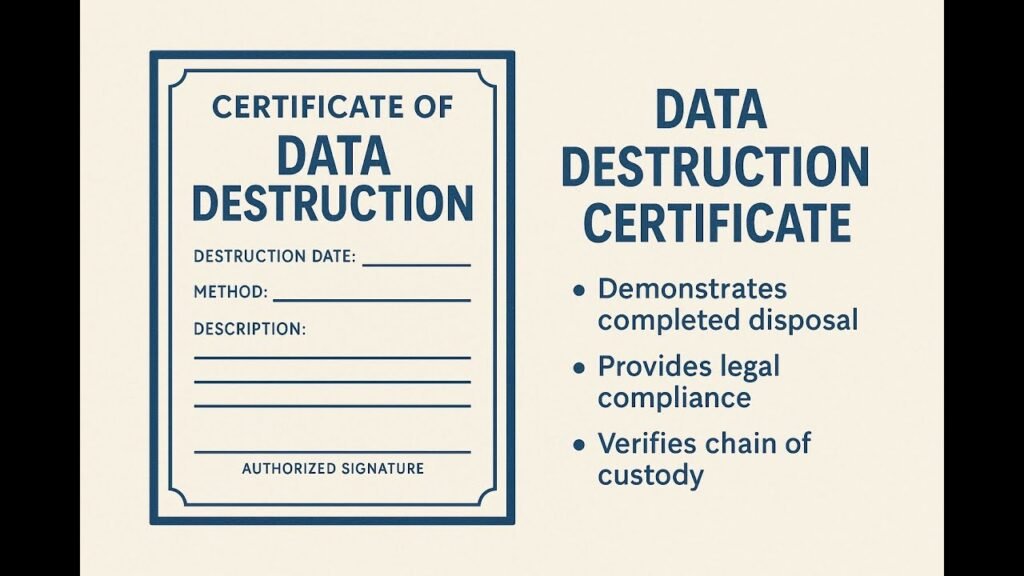
Why a Certificate of Data Destruction Matters
Saying that data was destroyed is different from having documentation showing that the destruction process was completed.
For organisations, a Certificate of Data Destruction can provide useful evidence for internal records, audits, compliance activities and asset disposal documentation.
Depending on the service and process, documentation may identify relevant information such as:
- Equipment or media processed
- Asset or serial information
- Quantity
- Destruction or sanitization method
- Date of processing
- Service provider
- Relevant certification or verification details
The certificate becomes part of the organisation’s disposal records and helps demonstrate that data destruction was treated as a formal process rather than an informal step.
How Nalabix Helps Organisations in Kenya
At Nalabix, we understand that responsible electronic disposal involves more than simply collecting unwanted equipment.
Our approach brings together secure data destruction, IT Asset Disposition (ITAD), controlled equipment handling, documentation and responsible e-waste management.
We help organisations manage data-bearing electronic equipment through appropriate processes that can include:
- Secure data sanitization
- Hard drive and SSD destruction
- IT asset disposal
- Data-bearing equipment handling
- Asset identification and tracking
- Data destruction documentation
- Certificates of Data Destruction
- E-waste recycling
- Corporate e-waste management
- End-of-life IT equipment processing
The objective is straightforward:
Protect the information. Control the asset. Document the process. Recycle responsibly.
For organisations that entrust Nalabix with data-bearing equipment, data security is not treated as an afterthought to recycling. It is an important part of the disposal process.
Contact Nalabix to discuss your data destruction and e-waste management requirements.