When a computer, server, or storage device reaches the end of its useful life, simply deleting files is not enough. Sensitive information can remain on a hard drive even after files are removed or a device is reset.
For businesses, the key question is: Should you wipe the data or physically destroy the hard drive?
Both methods can protect information, but they serve different purposes.
What Is Data Wiping?
Data wiping is the process of securely removing information from a storage device so that it cannot be recovered using normal data recovery methods.
Unlike simply deleting files or formatting a drive, secure wiping overwrites the data according to an established sanitization method.
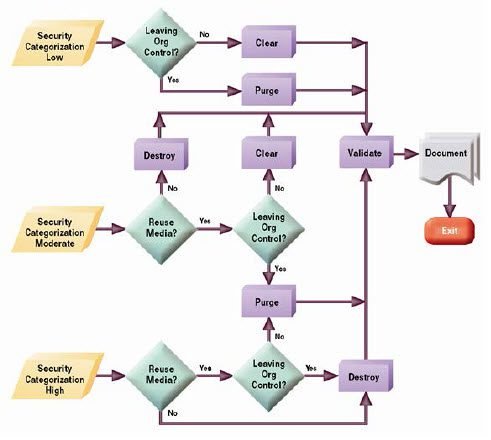
For example, we use recognized data sanitization procedures such as NIST SP 800-88 to determine the appropriate method for different types of storage media.
When is data wiping useful?
Data wiping is often suitable when:
- 💻 Computers will be reused or refurbished
- 🔄 Storage devices will be redeployed
- ♻️ Equipment will be resold or donated
- 🏢 Businesses want to reuse their IT assets
- 📄 The device remains physically functional
The major advantage is that the storage device remains usable after successful sanitization.
What Is Hard Drive Destruction?
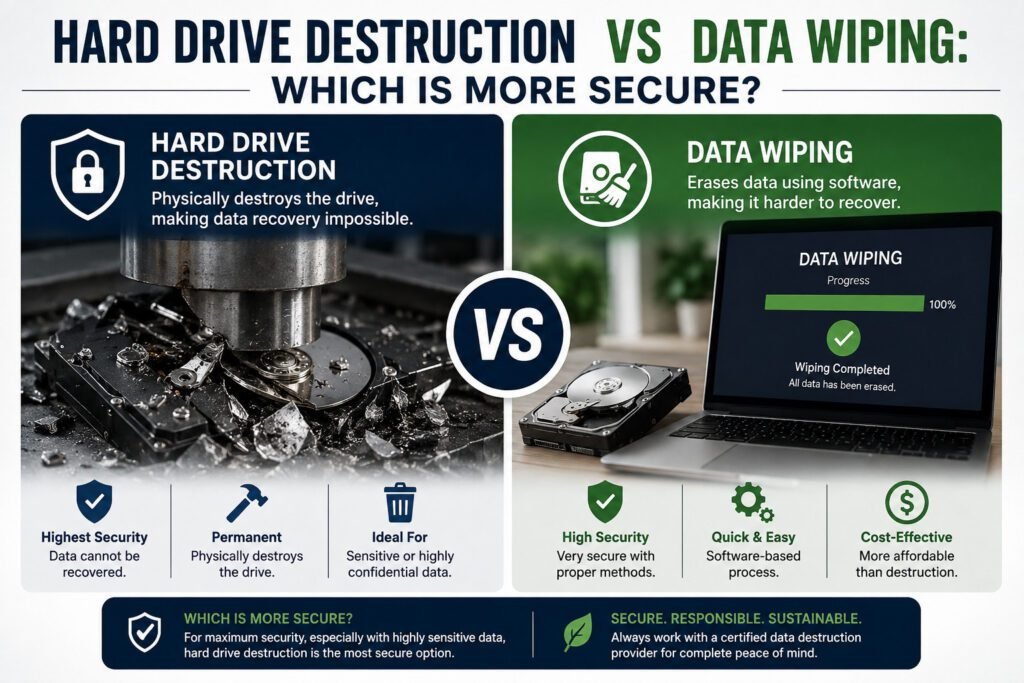
Hard drive destruction involves physically damaging or dismantling a storage device so that the data stored on it cannot be practically accessed.
Depending on the process, this may involve shredding, crushing, drilling, cutting, or dismantling the drive.
Once properly destroyed, the drive is no longer suitable for normal use.
When is destruction the better option?
Physical destruction may be appropriate when:
- 🔒 Highly confidential data is involved
- 💾 A drive is damaged or cannot be reliably wiped
- 🗄️ Storage devices have reached end-of-life
- 🏢 An organization has strict security requirements
- ♻️ Devices are being permanently retired
- ⚠️ There is a higher risk associated with data recovery
For particularly sensitive information, physical destruction provides a clear final step in the disposal process.
Hard Drive Destruction vs Data Wiping
| Feature | Data Wiping | Hard Drive Destruction |
|---|---|---|
| Data removed | Yes | Yes |
| Drive remains usable | Usually | No |
| Suitable for reuse | ✅ Yes | ❌ No |
| Suitable for end-of-life drives | ✅ Sometimes | ✅ Yes |
| Physical damage | No | Yes |
| Best for | Reuse and redeployment | Permanent disposal |
| Verification | Can be documented | Can be documented |
Which Method Should You Choose?
The right method depends on what happens to the device after data removal.
If the computer or hard drive will be reused, sold, refurbished, or redeployed, secure data wiping is generally the more practical option.
If the device is damaged, obsolete, or being permanently retired, physical destruction may provide a stronger final assurance that the data cannot be recovered.
In some cases, organizations may use a combination of processes—for example, securely wiping usable devices while physically destroying storage media that cannot be trusted or reused.
Why Businesses Need Proof of Data Destruction
For businesses, securely removing data is only part of the process. Documentation matters too.
A professional data destruction process should provide evidence of what happened to the storage device. Depending on the method used, this may include:
- Device or asset identification
- Serial numbers
- Destruction or wiping method
- Date and location of the process
- Verification records
- Certificate of Data Destruction
This creates an audit trail and helps organizations demonstrate responsible handling of sensitive information.
The Bottom Line
Data wiping and hard drive destruction are not competing solutions—they are tools for different situations.
Choose data wiping when the storage device needs to remain operational.
Choose physical destruction when the device is being permanently retired or the risks associated with the data require a final physical barrier.
The most important thing is not simply throwing away a hard drive. It is ensuring the information stored on it cannot fall into the wrong hands.
Need Secure Data Destruction in Kenya?
Nalabix provides professional data destruction and IT asset disposal services in Kenya, helping businesses securely handle end-of-life computers, hard drives, SSDs and other electronic equipment.
Whether you need secure data wiping, physical drive destruction, or documented IT asset disposal, using a professional process helps protect your data while supporting responsible e-waste management.