
Categories of WEEE Explained: A Simple Guide to Waste Electrical and Electronic Equipment
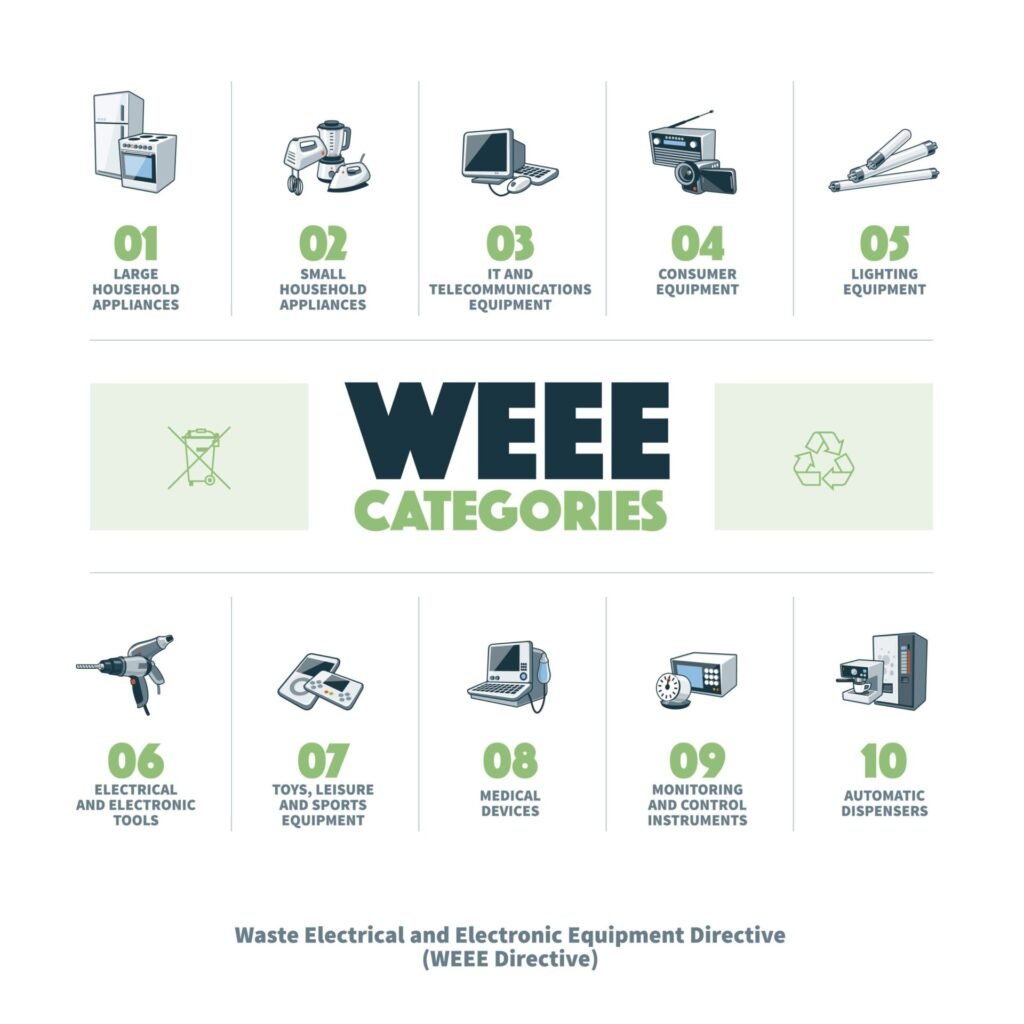
Electronic devices have become an essential part of everyday life. From smartphones and computers to refrigerators, televisions, medical equipment and solar systems, we depend on electrical and electronic equipment almost everywhere. But what happens when these products become old, damaged, obsolete or unwanted? They become Waste Electrical and Electronic Equipment (WEEE), commonly known as e-waste. Not all WEEE is the same. Different types of electrical and electronic equipment contain different materials, components and potential hazards. Understanding the categories of WEEE makes it easier to identify, collect, handle and recycle electronic waste responsibly. In this guide, we explain the main categories of WEEE, provide everyday examples and explain why proper WEEE management matters. What Is WEEE? WEEE stands for Waste Electrical and Electronic Equipment. It refers to electrical or electronic products that have been discarded because they are no longer wanted, working, useful or economical to repair. Examples include: In simple terms: If a product needs electricity or electronic components to perform its function and it is discarded, it may become WEEE. Why Are There Different Categories of WEEE? WEEE covers a very wide range of products. A refrigerator is very different from a mobile phone. A printer is different from a solar inverter, while medical equipment requires different handling from household electronics. Categorising WEEE helps recyclers and waste managers determine: Proper classification therefore supports safe handling, resource recovery and environmentally responsible recycling. Main Categories of WEEE WEEE can be divided into several broad categories based on the type and function of the equipment. 1. Large Electrical Appliances Large electrical appliances are some of the biggest items found in the WEEE stream. Examples include: These appliances can contain valuable materials such as steel, aluminium, copper and plastics. Some refrigeration and cooling equipment may also contain substances that require specialised handling. Why proper disposal matters Large appliances should not simply be dumped or dismantled without proper procedures. They can occupy significant landfill space and may contain components that require controlled treatment. Responsible recycling allows materials to be recovered while reducing environmental risks. 2. Small Electrical Appliances Small electrical appliances are found in homes, offices, shops and institutions. Examples include: Although these products are smaller than refrigerators or washing machines, they can collectively generate a large amount of e-waste. Many contain a mixture of: Proper recycling helps recover these materials instead of sending them to landfill. 3. IT and Telecommunications Equipment This is one of the most important WEEE categories for businesses and organisations. It includes equipment used for computing, communication, networking and information management. Examples include: Businesses can generate large quantities of IT-related WEEE when they upgrade systems or replace obsolete equipment. Why this category needs special attention IT equipment can contain valuable materials, but it may also contain sensitive data. For example, computers, servers, hard drives and storage devices may contain confidential business information. Therefore, responsible IT equipment disposal should consider both: Environmental responsibility + Data security Before recycling or destroying storage devices, organisations should use an appropriate data destruction process and maintain proper documentation. 4. Consumer Electronics Consumer electronics are electronic products primarily used for entertainment, communication and personal activities. Examples include: Televisions and monitors may contain different materials depending on their age and technology. Older equipment can require specialised handling, while newer flat-screen devices contain valuable plastics, metals, glass and electronic components. 5. Screens and Display Equipment Screens deserve special attention because they can contain different materials and components depending on their technology. Examples include: Older display technologies may require specialised treatment because of the materials used in their construction. Modern displays also contain valuable materials that can be recovered through appropriate recycling processes. Never assume that a broken screen belongs in ordinary household waste. 6. Lighting Equipment Lighting products are another important WEEE category. Examples include: Some lighting products can contain substances that require controlled handling. For this reason, lamps should be collected separately where appropriate and sent to suitable recycling or treatment facilities. 7. Electrical and Electronic Tools This category includes tools that operate using electricity or electronic components. Examples include: Businesses in construction, manufacturing and maintenance industries can generate significant quantities of electronic and electrical tool waste. Where equipment is still functional, repair, refurbishment or reuse may be preferable to immediate recycling. 8. Medical and Laboratory Equipment Healthcare facilities, laboratories and research institutions also generate WEEE. Examples include: Medical and laboratory equipment may contain a combination of metals, plastics, circuit boards, cables and other components. Because of their specialised nature, these items should be handled through appropriate procedures. Healthcare organisations should also consider whether equipment contains sensitive information or requires additional decontamination before disposal. 9. Monitoring and Control Equipment These are devices used to measure, monitor or control electrical, industrial, environmental or operational processes. Examples include: These devices may contain circuit boards, sensors, wiring and valuable metals. Proper dismantling allows different components and materials to be separated for recovery. 10. Automatic Dispensers Automatic dispensers are another category of electrical and electronic equipment. Examples include: These machines can contain large quantities of metal, electrical components, wiring, circuit boards and plastics. Because of their size and complexity, they should be dismantled and processed appropriately rather than discarded as general waste. 11. Batteries and Battery-Containing Equipment Batteries are closely associated with the electronic waste stream. Examples include: Batteries require particular care because some types can present fire, chemical or environmental risks if damaged, improperly stored or incorrectly processed. They should therefore be collected, stored and recycled using appropriate procedures. 12. Cables, Chargers and Accessories Small accessories can easily be overlooked when discussing e-waste. However, businesses and households can accumulate large quantities of: These items contain materials such as copper, aluminium, plastics and electronic components that can potentially be recovered. Instead of throwing them into general waste, they should be included in organised e-waste collection programmes. What Happens to WEEE After Collection? The journey does not end when electronic equipment is collected. A responsible WEEE recycling process can include several stages. 1. Collection Unwanted electrical and electronic equipment is