Every business eventually has IT equipment that is no longer needed. Computers are replaced, servers are upgraded, hard drives become obsolete, and office equipment reaches the end of its useful life.
But what happens next?
Simply throwing old equipment away can expose a business to data security, environmental, and compliance risks. IT Asset Disposition (ITAD) provides a structured way to manage retired technology securely and responsibly.
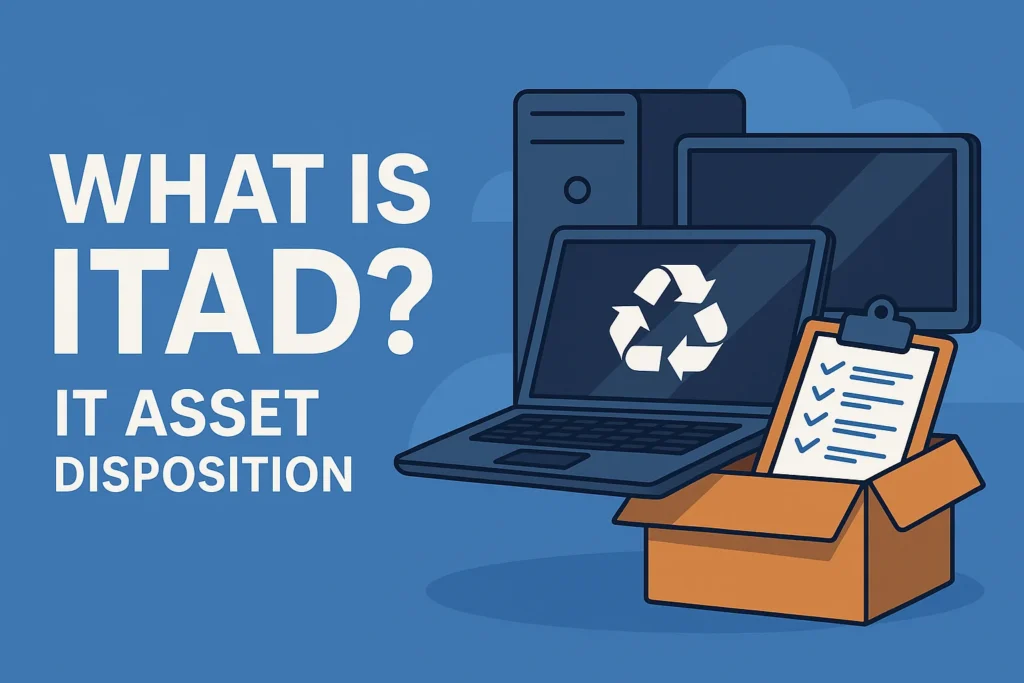
What Is IT Asset Disposition (ITAD)?
IT Asset Disposition (ITAD) is the process of managing IT equipment that has reached the end of its business use.
It covers what happens to equipment after it is retired, including:
- Secure collection and transportation
- Asset identification and tracking
- Data wiping or physical data destruction
- Equipment assessment
- Reuse or refurbishment where appropriate
- E-waste recycling
- Responsible final disposal
- Documentation and certification
The purpose is simple: protect the data, manage the equipment responsibly, and maintain accountability from collection to final disposition.
What Happens During the ITAD Process?
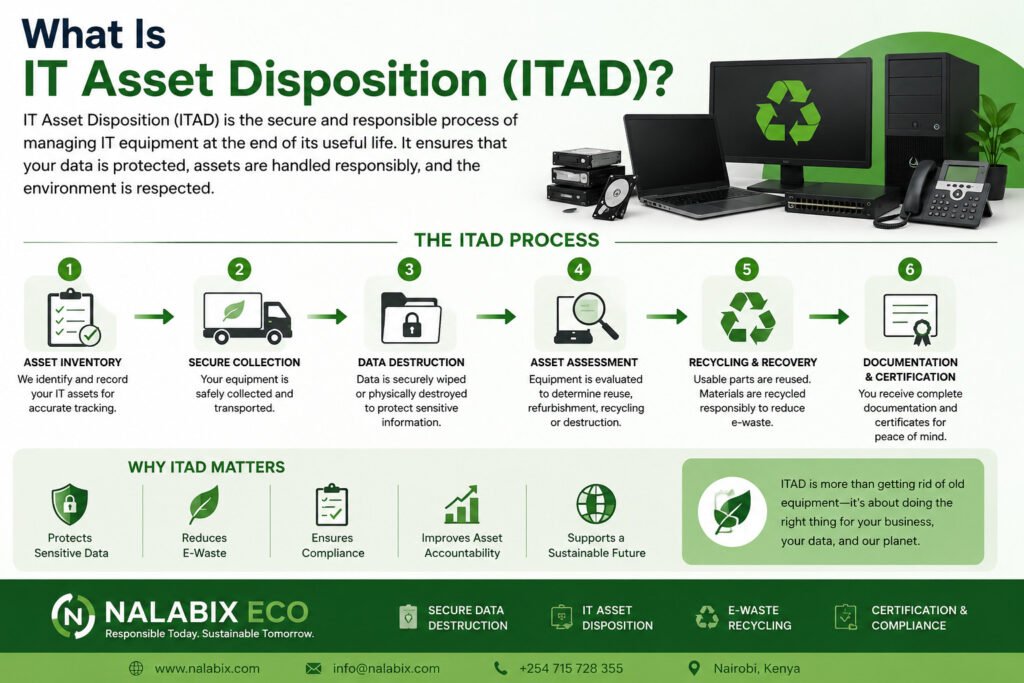
A professional ITAD process generally follows several important stages.
1. Asset Inventory
The first step is identifying the equipment being retired. This may include computers, laptops, servers, hard drives, SSDs, printers, networking equipment, and other IT assets.
Asset tags, serial numbers, quantities, and equipment condition can be recorded for accountability.
2. Secure Collection
Equipment is collected and handled in a controlled manner to reduce the risk of loss, theft, or unauthorized access—particularly when devices still contain data.
3. Data Destruction
Before equipment is reused, recycled, or disposed of, data-bearing devices should be securely sanitized or physically destroyed according to the organization’s requirements.
4. Asset Assessment
Equipment is assessed to determine the most appropriate next step.
Depending on its condition and requirements, an asset may be suitable for reuse, refurbishment, recycling, or destruction.
5. Recycling and Final Disposition
Equipment that has reached the end of its useful life is processed through responsible e-waste recycling channels. Different materials and components can be separated and directed to appropriate recovery processes.
6. Documentation and Certification
The final stage provides an auditable record of what was done with the equipment.
Certificates and supporting documentation can help businesses demonstrate that their retired IT assets were handled responsibly.
ITAD vs. Simply Disposing of Old IT Equipment
There is a major difference between ITAD and ordinary disposal.
| Ordinary Disposal | IT Asset Disposition |
|---|---|
| Focuses mainly on getting rid of equipment | Manages the entire disposition process |
| Data security may be overlooked | Data destruction is a key consideration |
| Limited asset tracking | Assets can be tracked and documented |
| May contribute to improper e-waste disposal | Promotes responsible recycling |
| Little or no supporting documentation | Provides records and certification |
ITAD treats retired technology as an asset that needs to be securely managed, not simply thrown away.
Why Does ITAD Matter?
Retired IT equipment can contain much more than outdated technology. A single computer, server, or storage device may still contain passwords, customer information, financial records, business documents, or other confidential data.
At the same time, electronic equipment contains materials that should not end up in ordinary waste streams.
1. Protects Sensitive Business Data
ITAD includes appropriate data sanitization or physical destruction methods to ensure information stored on retired devices cannot be improperly accessed.
2. Reduces E-Waste
TAD directs obsolete equipment into appropriate recycling and recovery processes, helping keep electronic waste out of landfills and supporting the recovery of valuable materials.
3. Creates Asset Accountability
Businesses need to know what happened to their equipment after it left their premises.
An effective ITAD process can track assets through key stages, creating a clear record of collection, data destruction, recycling, and final disposition.
4. Provides Documentation
For many organizations, responsible disposal is not complete without evidence.
Depending on the service provided, ITAD documentation may include collection records, asset inventories, data destruction records, recycling documentation, and certificates of destruction or recycling.
Who Needs ITAD Services?
ITAD can benefit organizations that regularly retire or replace technology, including:
- Banks and financial institutions
- Government organizations
- Schools and universities
- Healthcare facilities
- NGOs
- Manufacturing companies
- Retail businesses
- Technology companies
- Corporate offices
It is particularly valuable for organizations handling large quantities of equipment or sensitive information.
IT Asset Disposition in Kenya
As businesses in Kenya continue to adopt new technologies, the volume of retired electronic equipment is also growing.
A responsible ITAD approach helps organizations manage this equipment while addressing two important priorities: data security and responsible e-waste management.
For businesses replacing computers, upgrading servers, clearing office equipment, or decommissioning IT infrastructure, having a documented disposition process can provide greater control and peace of mind.
How Nalabix Eco Supports ITAD
Nalabix Eco provides businesses in Kenya with responsible IT asset disposition solutions covering secure collection, data destruction, e-waste recycling, documentation, and certification.
We help organizations move beyond simply getting rid of obsolete equipment by ensuring retired IT assets are handled through a structured and responsible process.
Our services can help businesses:
- Secure data-bearing devices before final disposition
- Manage obsolete IT equipment responsibly
- Recycle electronic waste through appropriate channels
- Maintain records of asset handling
- Obtain relevant destruction and recycling certification
The Bottom Line
IT Asset Disposition is not simply about disposing of old computers. It is about managing retired technology securely, responsibly, and transparently.
A well-managed ITAD process helps protect sensitive information, reduce e-waste, improve asset accountability, and provide businesses with documentation of what happened to their equipment.
For organizations in Kenya, partnering with a responsible ITAD and e-waste management provider can make the transition from retired technology to secure final disposition much safer and more sustainable.
Nalabix Eco — responsible IT asset disposition, secure data destruction, and e-waste recycling for businesses in Kenya.