When businesses dispose of computers, hard drives, servers, laptops, and other IT equipment, simply deleting files is not enough. Data can remain recoverable even after a device appears empty.
Certified data destruction provides a secure and documented way to permanently eliminate sensitive information from data-bearing devices while creating evidence that the destruction was completed.
What Is Certified Data Destruction?
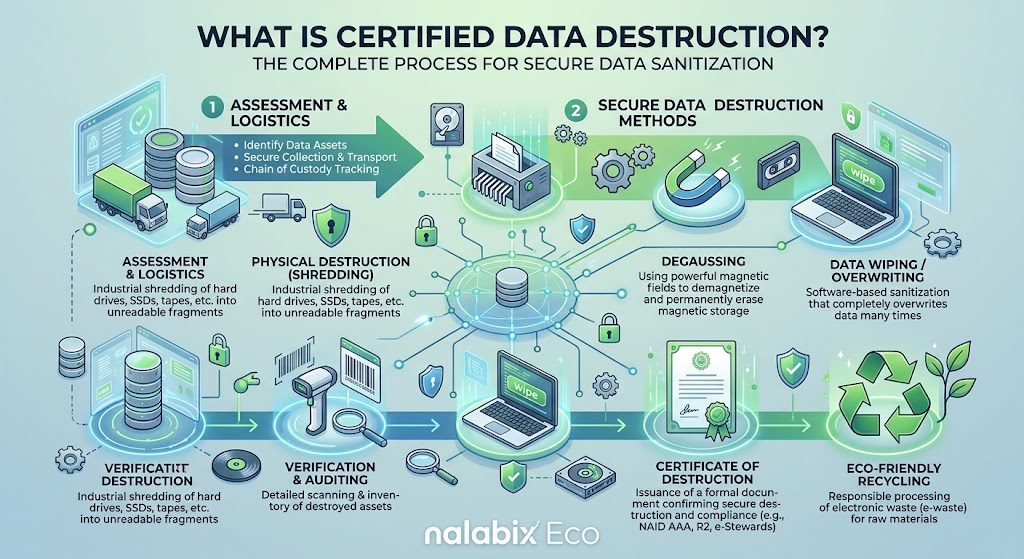
Certified data destruction is the process of securely destroying or permanently erasing data from storage devices and providing documentation to verify that the process was completed.
Depending on the device and security requirements, data may be destroyed through:
- Secure data wiping using recognized data-erasure methods
- Physical destruction of hard drives, SSDs, and other storage media
- On-site destruction where appropriate, allowing clients to witness the process
- Controlled handling and recycling of destroyed equipment
The goal is not simply to make the device unusable—it is to ensure that the information stored on it cannot be accessed or reconstructed.
Why Is Data Destruction Certification Important?
A certificate provides businesses with a documented record of what happened to their data-bearing equipment.
This can help organizations:
Protect Sensitive Information
Old devices may contain customer records, employee information, financial documents, passwords, emails, and business data. Secure destruction reduces the risk of this information falling into the wrong hands.
Demonstrate Accountability
A certificate creates a clear record showing that specific devices were processed and their data was securely destroyed.
Support Compliance
Organizations may have legal, regulatory, contractual, or internal data-protection requirements. Documented destruction can help demonstrate that appropriate disposal procedures were followed.
Strengthen IT Asset Disposal
Data destruction should be part of a complete IT Asset Disposition (ITAD) process. Devices can be tracked from collection through data destruction, recycling, and final documentation.
What Does a Data Destruction Certificate Include?
A professional certificate should provide enough information to identify the completed destruction activity. Depending on the service, this may include:
- Client or organization name
- Date of destruction
- Device or media type
- Quantity of devices destroyed
- Asset tags or serial numbers where applicable
- Destruction method
- Confirmation of completion
- Certificate or reference number
- Authorized signatures
This documentation gives organizations a traceable record rather than relying on a verbal confirmation.
Data Wiping vs. Physical Destruction
Not every device needs to be physically destroyed.
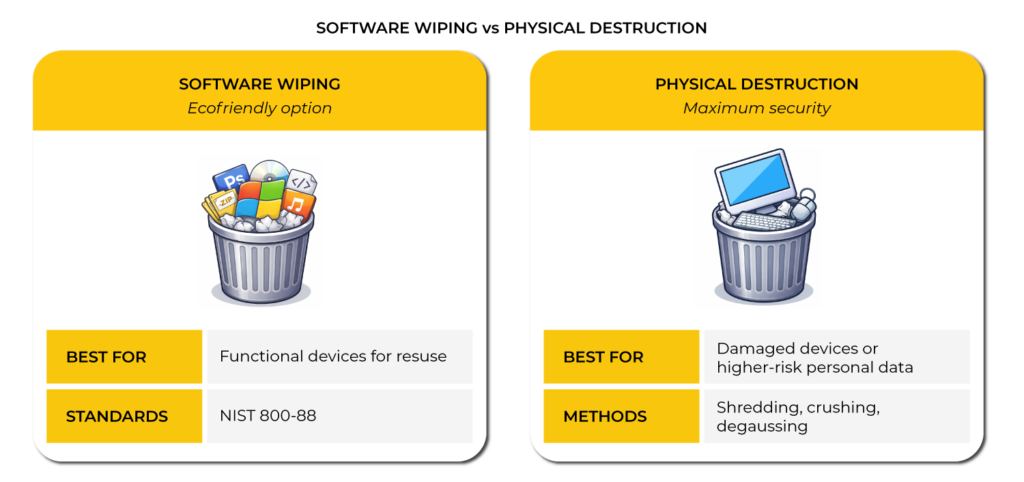
Secure data wiping may be appropriate when equipment will be reused or refurbished and the storage media remains functional.
Physical destruction is generally preferred when a storage device is damaged, obsolete, no longer required, or when the organization requires the media to be rendered physically unusable.
The appropriate method depends on the device, its condition, the sensitivity of the information, and the organization’s security requirements.
What Happens After Destruction?
Data destruction is only one part of responsible IT equipment disposal.
Once data-bearing devices have been securely processed, remaining electronic equipment can be directed into appropriate e-waste recycling and recovery channels. Materials such as metals, plastics, and other components can be recovered where suitable instead of being improperly disposed of.
This connects data security with environmental responsibility.
Choose a Documented Data Destruction Process
Secure disposal should leave no uncertainty about what happened to your organization’s data.
Whether you require secure wiping, physical destruction, on-site services, or documented IT asset disposal, a structured process helps protect sensitive information while supporting responsible e-waste management.
Nalabix provides secure data destruction and e-waste management services in Kenya, helping organizations manage data-bearing devices responsibly from collection and destruction through recycling and certification.
Final Takeaway
Certified data destruction is more than deleting files or throwing away old equipment. It combines secure data removal, controlled handling, physical destruction where required, documentation, and responsible recycling.
For businesses, the certificate provides something valuable: proof that sensitive data was securely destroyed and the disposal process was properly documented.