
Kenya is becoming increasingly digital. From smartphones and computers to televisions, printers, servers and household appliances, electronic devices have become part of everyday life. But as technology use grows, so does the amount of electronic waste (e-waste) being generated.
The good news is that e-waste is not only an environmental challenge. It is also an opportunity to create jobs, recover valuable materials and build a more sustainable circular economy in Kenya.
Why E-Waste Recycling Matters in Kenya
Many old electronic devices contain valuable materials such as copper, aluminium, steel and other recoverable components. At the same time, some electronics contain substances that can harm people and the environment when they are improperly handled.
When e-waste is dumped, burned or dismantled using unsafe methods, valuable resources are lost and pollution can increase.
Responsible e-waste recycling provides a better solution by ensuring that unwanted electronics are collected, sorted, refurbished, dismantled and recycled through appropriate processes.
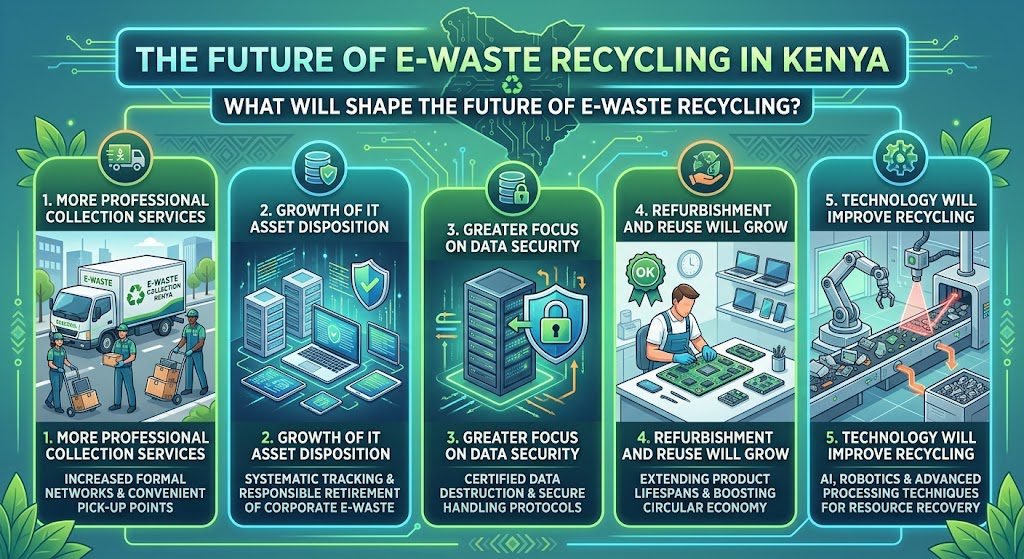
What Will Shape the Future of E-Waste Recycling?
1. More Professional Collection Services
One of the biggest opportunities is improving access to reliable e-waste collection.
Businesses, institutions and households need convenient ways to dispose of old electronics responsibly. More professional collection networks will make it easier to move e-waste from offices, homes and institutions to authorised recycling facilities.
This will be particularly important as demand for electronics continues to grow across Kenya.
2. Growth of IT Asset Disposition
Businesses are replacing computers, servers, storage devices and other IT equipment more frequently.
This is creating greater demand for IT Asset Disposition (ITAD) services that combine:
- Secure data destruction
- Equipment collection
- Asset assessment
- Reuse and refurbishment
- Responsible recycling
- Documentation and reporting
The future of e-waste management will therefore involve much more than simply collecting old electronics.
3. Greater Focus on Data Security
Old computers, laptops, servers and storage devices can contain sensitive information.
As organisations become more aware of data protection risks, secure data destruction will become an increasingly important part of e-waste management.
Businesses will increasingly expect data destruction certificates and proper chain-of-custody documentation when disposing of IT equipment.
4. Refurbishment and Reuse Will Grow
Not every electronic device needs to be recycled immediately.
Some equipment can be upgraded and reused, extending its useful life and reducing the demand for new raw materials.
This supports the circular economy, where products and materials remain in use for as long as possible instead of becoming waste after their first life.
5. Technology Will Improve Recycling
The future will also bring better technologies for identifying, sorting and recovering materials from electronic waste.
Improved recycling processes can help recover valuable resources while reducing the amount of material sent to disposal.
For Kenya, developing stronger recycling capabilities could also reduce dependence on exporting certain recyclable materials and create new opportunities within the local economy.
E-Waste Recycling Can Create Jobs and Economic Opportunities
E-waste recycling is not only about environmental protection.
A growing recycling industry can support employment in:
- Collection and logistics
- Equipment refurbishment
- Dismantling and recycling
- Material recovery
- Data destruction
- Environmental compliance
- Recycling technology
It can also create opportunities for businesses that develop innovative solutions for collection, reuse and resource recovery.
What Does the Future Look Like?
Kenya’s e-waste sector is likely to become more formal, technology-driven and circular.
Businesses will increasingly look for certified and traceable disposal solutions. Consumers will become more aware of responsible electronics disposal. At the same time, recycling companies will play a greater role in recovering materials and extending the life of electronic products.
The future is therefore not simply about managing more waste. It is about turning e-waste into resources and opportunities.
How Businesses Can Prepare
Businesses can contribute to a better e-waste future by:
- Creating an internal e-waste disposal policy.
- Keeping an inventory of obsolete electronic equipment.
- Using responsible e-waste collection services.
- Securely destroying data before disposing of IT equipment.
- Prioritising reuse and refurbishment where practical.
- Working with qualified and authorised recycling partners.
- Maintaining disposal and recycling documentation.
Building a Sustainable E-Waste Future
The future of e-waste recycling in Kenya will depend on collaboration between businesses, government, recyclers, technology providers and communities.
With better collection systems, secure IT asset disposal, responsible recycling and greater investment in the circular economy, Kenya can turn the growing e-waste challenge into an opportunity for environmental protection, resource recovery and economic growth.
At Nalabix, we believe responsible e-waste management starts with giving unwanted electronics a better end-of-life. Through collection, secure data destruction, refurbishment and responsible recycling, businesses can reduce environmental impact while supporting Kenya’s transition towards a circular economy.
The future of e-waste recycling in Kenya is not just about disposing of old electronics—it is about giving valuable resources a second life.