Electronic devices are now part of everyday life. From computers and mobile phones to printers, televisions, servers, and office equipment, we rely on electronics at home and at work.
But what happens when these devices stop working or are no longer needed?
They become electronic waste, or e-waste.
With the growing use of technology in Kenya, responsible e-waste collection services in Kenya are becoming increasingly important. Proper collection helps prevent harmful disposal, recover valuable materials, and ensure old electronics are handled responsibly.
What Is E-Waste?
E-waste refers to unwanted or end-of-life electrical and electronic equipment.
Common examples include:
- 💻 Computers, laptops, and desktops
- 🖨️ Printers and scanners
- 📱 Mobile phones and tablets
- 🖥️ Monitors and televisions
- 🔌 UPS systems and power equipment
- 🗄️ Servers and networking equipment
- 🔋 Batteries and electronic components
- 🖥️ Office and data-centre equipment
Instead of throwing these items into ordinary waste bins, they should be collected and managed through appropriate e-waste channels.
Why Is E-Waste Collection Important in Kenya?
Improper disposal of electronics can create environmental and health concerns. Some electronic equipment contains hazardous substances that require controlled handling.
At the same time, many devices contain recoverable materials such as aluminium, copper, steel, plastics, and other valuable components.
Professional e-waste collection therefore supports two important goals:
Protecting the environment while recovering resources for recycling and reuse.
How Do E-Waste Collection Services Work?
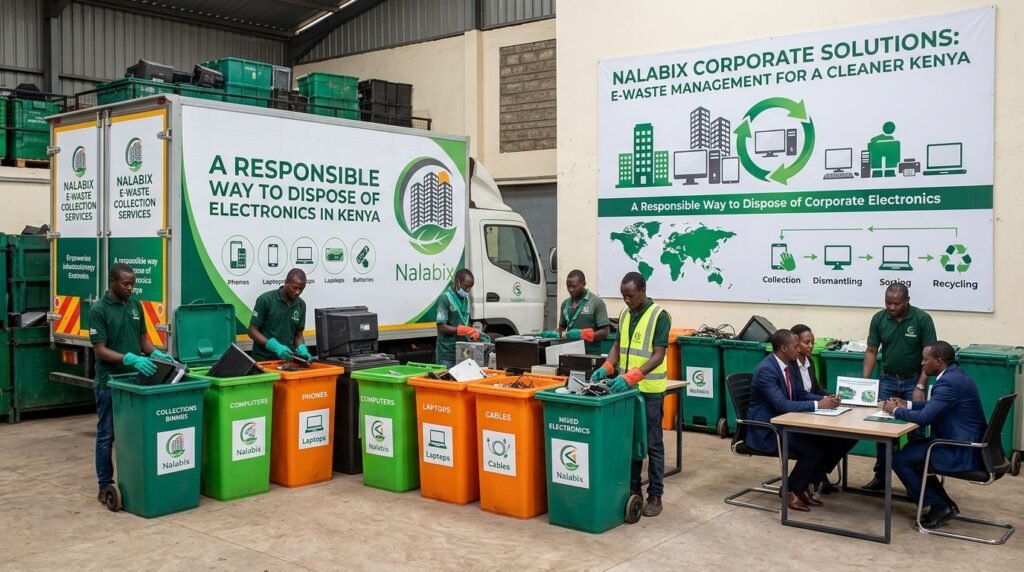
A professional e-waste collection process usually follows several steps:
1. Collection Request
A business, institution, organisation, or individual contacts an e-waste service provider and provides details about the equipment available for collection.
2. Assessment
The equipment can be assessed to determine its type, quantity, condition, and appropriate handling requirements.
3. Safe Collection
The e-waste is collected and transported using appropriate procedures to reduce damage, loss, or unsafe handling.
4. Sorting and Processing
Collected equipment is sorted according to its condition and material type. Items for recycling.
5. Recycling and Responsible Disposal
End-of-life equipment is processed to recover useful materials, while components that require specialised treatment are directed to appropriate recycling or disposal channels.
Who Needs E-Waste Collection Services?
E-waste collection is useful for both organisations and individuals.
Individuals can also use professional e-waste collection services when disposing of old computers, televisions, phones, appliances, and other electronic devices.
E-Waste Collection and Data Security
For businesses, disposing of electronic equipment involves more than environmental responsibility.
Old computers, laptops, servers, hard drives, and storage devices may still contain sensitive information.
That is why e-waste collection can be combined with secure data destruction. Depending on the equipment and requirements, data may be securely erased or storage media physically destroyed.
Businesses should request appropriate documentation, such as a certificate of data destruction or recycling, where applicable.
Benefits of Professional E-Waste Collection
Using a professional e-waste collection service can provide several benefits:
- ♻️ Promotes responsible recycling
- 🌱 Reduces improper disposal
- 🔄 Supports resource recovery and the circular economy
- 🔐 Helps protect sensitive business data
- 📦 Makes large-scale electronics disposal easier
- 📄 Provides documentation for responsible disposal
- 🇰🇪 Supports better e-waste management in Kenya
Choosing an E-Waste Collection Company in Kenya
Before choosing a service provider, consider whether the company can demonstrate responsible handling practices.
Look for a provider that offers:
- Professional e-waste collection and transportation
- Proper sorting and recycling
- Secure data destruction where required
- Documentation and certificates
- Transparent handling processes
- Appropriate environmental compliance and licensing
For businesses disposing of large quantities of equipment, it is also useful to ask about IT Asset Disposition (ITAD) services, particularly when equipment may have resale, refurbishment.
Nalabix E-Waste Collection Services in Kenya
At Nalabix, we help businesses, organisations, institutions, and communities manage unwanted and end-of-life electronics responsibly.
Our services include e-waste collection, computer recycling, IT equipment recycling, data destruction, IT asset disposition, and responsible e-waste management.
Whether you have a few obsolete devices or a large volume of corporate IT equipment, proper collection is the first step toward responsible recycling.
Final Thoughts
E-waste should not simply disappear into general waste. With the increasing use of technology in Kenya, responsible collection and recycling are essential for protecting the environment and recovering valuable resources.
Choosing professional e-waste collection services in Kenya makes it easier to move old electronics from storage rooms, offices, and homes into a proper recycling and recovery process.
Have old computers, electronics, or IT equipment that need responsible disposal? Nalabix can help you collect, manage, recycle, and document your e-waste responsibly.