
Introduction
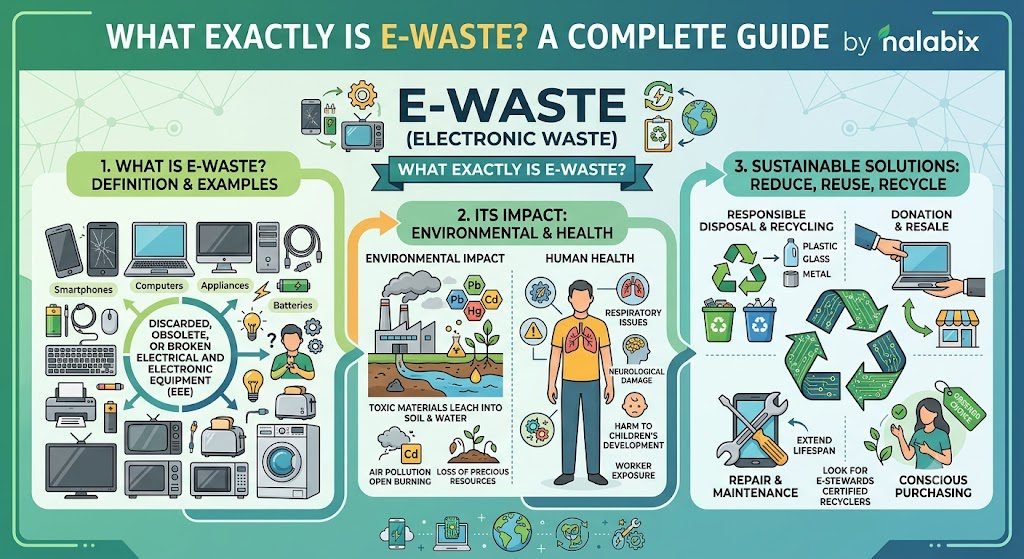
Electronic waste (commonly called e-waste) refers to electrical or electronic devices that are no longer wanted, no longer work, or have reached the end of their useful life.
These products contain valuable materials such as gold, copper, aluminum, and silver. However, they may also contain hazardous substances like lead, mercury, cadmium, and lithium, making proper disposal essential.
As technology evolves rapidly, millions of electronic devices are discarded every year, making e-waste one of the fastest-growing waste streams worldwide.
In this guide, you’ll learn:
- What e-waste is
- Why it is increasing
- Common examples
- Environmental and health impacts
- How e-waste is recycled
- How individuals and businesses can dispose of electronics responsibly
What Exactly Is E-Waste?
E-waste refers to discarded electrical and electronic equipment.
An item becomes e-waste when it:
- No longer works
- Cannot be repaired economically
- Has become obsolete
- Is replaced with a newer model
- Is no longer needed
Simply put:
If it uses electricity, batteries, or electronic circuits and has reached the end of its useful life, it is probably e-waste.
Read more: What Exactly Is E-Waste?
Why Is It Called E-Waste?
The term combines two simple words:
- Electronic
- Waste
The “E” stands for Electronic, distinguishing these products from ordinary household waste.
Although the name sounds simple, it includes thousands of products—from mobile phones and laptops to refrigerators and industrial equipment.
Related article: Why Is It Called E-Waste?
What Is Another Name for E-Waste?
Depending on the country or industry, e-waste may also be called:
- Waste Electrical and Electronic Equipment (WEEE)
- Electronic scrap
- E-scrap
- End-of-life electronics
- Obsolete electronics
- IT Asset Disposal (ITAD)
While the names differ slightly, they all refer to discarded electronic devices.
Learn more: What Is Another Name for E-Waste?
Why Is E-Waste a Growing Problem?
Electronic waste has become one of today’s biggest environmental challenges.
When electronics are dumped in landfills or burned, they can release harmful substances such as:
- Lead
- Mercury
- Cadmium
- Chromium
- Brominated flame retardants
- Lithium battery chemicals
These toxins may contaminate:
- Soil
- Groundwater
- Rivers
- Air
Proper recycling prevents pollution while recovering valuable materials for reuse.
Continue reading: What Is E-Waste and Why Is It a Problem?
The History of Electronic Waste
Electronic waste has existed for decades, but it has increased dramatically due to rapid technological advancement.
Years ago, televisions, radios, and computers were used for many years before replacement.
Today, electronics are replaced much more frequently because of:
- Faster innovation
- Software updates
- Consumer demand
- Business upgrades
- Planned obsolescence
As a result, global e-waste continues to grow every year.
Read more: History of Electronic Waste
Categories of E-Waste
Electronic waste falls into several categories.
IT Equipment
- Desktop computers
- Laptops
- Servers
- Monitors
Telecommunications Equipment
- Mobile phones
- Routers
- Switches
- Networking devices
Consumer Electronics
- TVs
- Cameras
- Speakers
- Gaming consoles
Household Appliances
- Refrigerators
- Washing machines
- Air conditioners
- Microwaves
Lighting Equipment
- LED bulbs
- Fluorescent lamps
Medical Equipment
- Diagnostic machines
- Laboratory electronics
Each category requires specialized recycling because the materials differ.
Read the full guide: Categories of E-Waste Explained
Why Is E-Waste Increasing?
Several factors contribute to the growing volume of electronic waste.
Rapid Technological Advancement
New devices offer better performance and features, encouraging frequent upgrades.
Short Product Lifecycles
Many electronics become outdated within only a few years.
Consumer Demand
People regularly replace phones, laptops, and smart devices with newer models.
Affordable Electronics
Lower prices mean households own more electronic devices than ever before.
Limited Repair Options
Many modern devices are difficult or expensive to repair, making replacement more attractive.
Learn more: Why Is E-Waste Increasing?
E-Waste vs. Solid Waste
Electronic waste should never be treated like ordinary household garbage.
Unlike municipal solid waste, e-waste contains:
- Hazardous chemicals
- Valuable metals
- Sensitive data
- Components requiring specialized recycling
Proper separation protects both the environment and personal information.
Read more: E-Waste vs. Solid Waste: What’s the Difference?
Environmental Impact of E-Waste
Improper disposal has serious environmental consequences.
Soil Contamination
Toxic substances can seep into soil and reduce its quality.
Water Pollution
Heavy metals may contaminate rivers, lakes, and groundwater.
Air Pollution
Burning electronics releases dangerous gases and particles.
Climate Change
Manufacturing new electronics requires large amounts of energy and raw materials.
Loss of Valuable Resources
Millions of dollars’ worth of metals are lost each year instead of being recovered through recycling.
Health Risks of E-Waste
Unsafe handling of electronic waste can expose people to hazardous chemicals.
Possible health effects include:
- Respiratory diseases
- Kidney damage
- Liver disorders
- Neurological problems
- Developmental issues in children
- Reproductive health concerns
- Skin diseases
- Increased cancer risk
Workers in informal recycling operations face the greatest risk.
Why E-Waste Recycling Matters
Recycling electronic waste offers many environmental and economic benefits.
It helps to:
- Conserve natural resources
- Reduce pollution
- Save energy
- Create employment
- Support the circular economy
How E-Waste Is Recycled
Most certified recycling facilities follow these steps:
- Collection
- Sorting
- Manual dismantling
- Mechanical shredding
- Material separation
- Refining and recovery
Recovered materials are then reused to manufacture new products.
How to Dispose of E-Waste Responsibly
Instead of throwing electronics in the trash, consider these options:
- Donate working electronics.
- Repair devices before replacing them.
- Sell reusable equipment.
- Use certified recycling centers.
- Participate in manufacturer take-back programs.
- Erase personal or business data before disposal.
How Businesses Can Reduce E-Waste
Organizations can minimize electronic waste by:
- Purchasing durable equipment
- Extending device lifespans
- Upgrading components instead of replacing systems
- Maintaining IT assets
- Working with certified e-waste recyclers
- Training employees on proper disposal
Government Efforts to Manage E-Waste
Many governments now promote responsible electronic waste management through:
- Extended Producer Responsibility (EPR)
- Mandatory recycling targets
- Collection infrastructure
- Import and export regulations
- Public awareness campaigns
- Environmental compliance standards
Simple Ways Everyone Can Reduce E-Waste
You can make a difference by:
- Buying only what you need
- Choosing durable products
- Protecting devices with cases
- Keeping software updated
- Replacing batteries instead of entire devices
- Buying refurbished electronics
- Donating unused equipment
- Recycling responsibly
- Supporting sustainable manufacturers
The Future of E-Waste Management
The future of e-waste management focuses on innovation, repairability, refurbishment, and recycling.
Manufacturers are increasingly designing products that are easier to repair and recycle, while governments continue strengthening regulations and public awareness.
By embracing a circular economy, valuable materials remain in use for longer, reducing environmental impact and conserving natural resources.
Frequently Asked Questions About E-Waste
Is e-waste recyclable?
Yes. Many electronic devices can be dismantled and recycled to recover valuable materials.
Can I throw electronics in the normal trash?
No. Electronics should never be mixed with household waste because they contain hazardous substances and recyclable resources.
Why is secure data destruction important?
Computers, laptops, servers, and storage devices often contain confidential information. Professional data destruction ensures sensitive data cannot be recovered.
Who should recycle e-waste?
Everyone—including households, businesses, schools, hospitals, manufacturers, and government institutions.
Does Kenya have e-waste regulations?
Yes. Kenya has regulations governing electronic waste management. Businesses should work with licensed e-waste recyclers to remain compliant.
Conclusion: Why Responsible E-Waste Recycling Matters
Electronic waste is one of the fastest-growing environmental challenges of the digital age. However, it also presents an opportunity to recover valuable materials, reduce pollution, and support a more sustainable future.
Whether you’re replacing a single smartphone or retiring hundreds of corporate IT assets, responsible e-waste recycling helps protect the environment, conserve natural resources, safeguard sensitive data, and ensure compliance with environmental regulations.
If you’re in Kenya, partnering with a licensed e-waste recycler such as Nalabix ensures your electronics are handled safely, securely, and in accordance with national environmental standards.